REVIEW · BERLIN
Berlin: The Feuerle Collection Meditation Experience
Book on GetYourGuide →Operated by The Feuerle Collection · Bookable on GetYourGuide
A silent hour beats a loud museum. The Berlin Feuerle Collection Meditation Experience turns a ticket into a calm, mobile detox for your senses, set around Khmer and Chinese art plus striking contemporary works. I love the way it asks you to slow down without needing a lecture, and I love the unusual path that moves you through the Sound Room and down to the underground Lake Room. The main drawback is also the biggest rule: it is not a guided tour, so if you want explanations, context, and commentary, you’ll need to enjoy art mostly on your own.
This is a one-hour meditation experience at The Feuerle Collection. Meditation is optional, and you can simply walk quietly and enjoy the artworks. You’re given a yoga mat and a blanket, which makes it easier to stay put and let the art do the talking.
In This Review
- Key highlights in plain terms
- Feuerle Collection meditation in Berlin: why silence is the main event
- Price and what $25 buys you for a 1-hour session
- Getting there and finding the vibe quickly
- The Sound Room passage: your first shift from busy to still
- Underground Lake Room: where quiet contemplation gets physical
- The art mix: Khmer sculpture, Imperial Chinese furniture, and major contemporary names
- Meditation optional: how to do it if you’re new or uninterested
- Who should book this, and who might want a different plan
- Should you book the Feuerle Collection Meditation Experience?
- FAQ
- FAQ
- How long is the Feuerle Collection Meditation Experience?
- How much does it cost?
- Is this experience a guided tour?
- Is meditation mandatory?
- What rooms are part of the experience?
- What art styles and periods can I expect to see?
- Which contemporary artists might appear in the exhibition?
- What’s included in the ticket?
- Is the experience suitable for children?
- Is wheelchair access available?
Key highlights in plain terms
- A silent, optional meditation format: you can sit, breathe, or quietly move at your own pace
- Sound Room + underground Lake Room: the route matters as much as the artworks
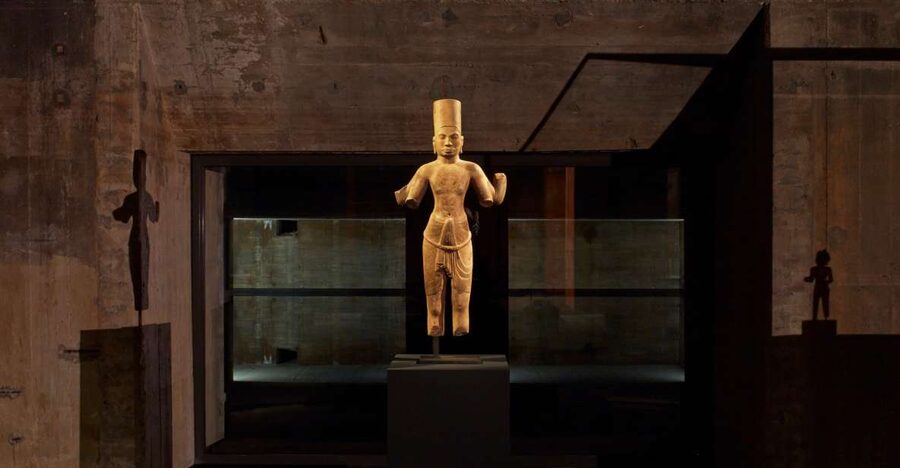
- Khmer sculptures and Imperial/Scholar Chinese furniture: early global art, framed for still attention
- Contemporary art in the mix: you encounter major names alongside older works
- Yoga mat and blanket included: comfort is part of the design, not an afterthought
Feuerle Collection meditation in Berlin: why silence is the main event
If you’ve ever walked into a museum expecting to think your way through it, this experience flips the script. It’s built for quiet attention, not for fast facts. In practice, that means you’re there to slow your brain down and let your eyes, body, and breathing catch up.
The setting is art-first, but the format is meditation-first. The idea is a silent environment that supports a mobile detox. Even if you do only a little meditation, you still benefit from the chance to be in a room where people aren’t chatting, rushing, or filming everything for likes. That alone is a rare kind of value in Berlin.
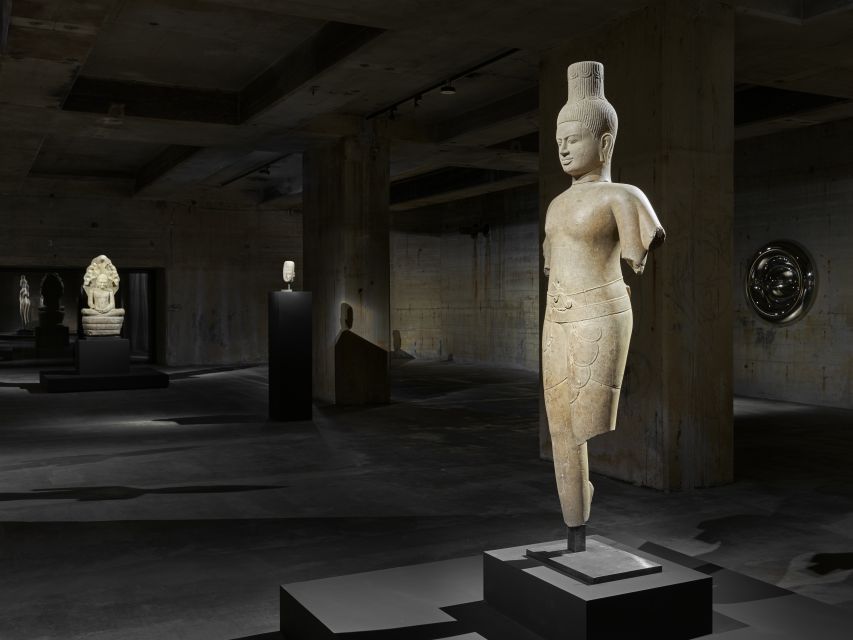
What I also like is the deliberate mismatch of eras and styles. You’re not seeing one neat timeline where everything matches. Instead, you move through juxtapositions: early Khmer sculpture, Imperial and Scholar Chinese furniture, then contemporary artists. That contrast can make old objects feel immediate, and contemporary works feel less intimidating. You’ll spend less energy trying to decode and more energy noticing.
One practical caution: because this is designed for silence and meditation, it may feel strange if you want a social visit or a lively museum atmosphere. Come ready to be quiet for an hour.
Price and what $25 buys you for a 1-hour session
At $25 per person for a 1-hour experience, you’re paying for access to a specific way of seeing. You’re not paying for a guided tour with a commentary track. Instead, you’re paying for a calm exhibition space that is open only for meditation, plus basic comfort items: a yoga mat and a blanket.
That makes the value pretty clear. If you’re the kind of traveler who likes art but hates being talked at, you’ll probably feel like this is money well spent. If you want the historical explanations, the influence-maps, and the “here’s what to notice” spiel, then this may feel under-built because the collection is open only for meditation.
Duration is the other reason the price works. One hour is long enough to settle and notice patterns—how your attention changes after a few minutes of stillness. It’s also short enough that you don’t feel trapped. If you’re busy in Berlin and you want something different from the usual museum circuit, this is a neat fit.
Getting there and finding the vibe quickly
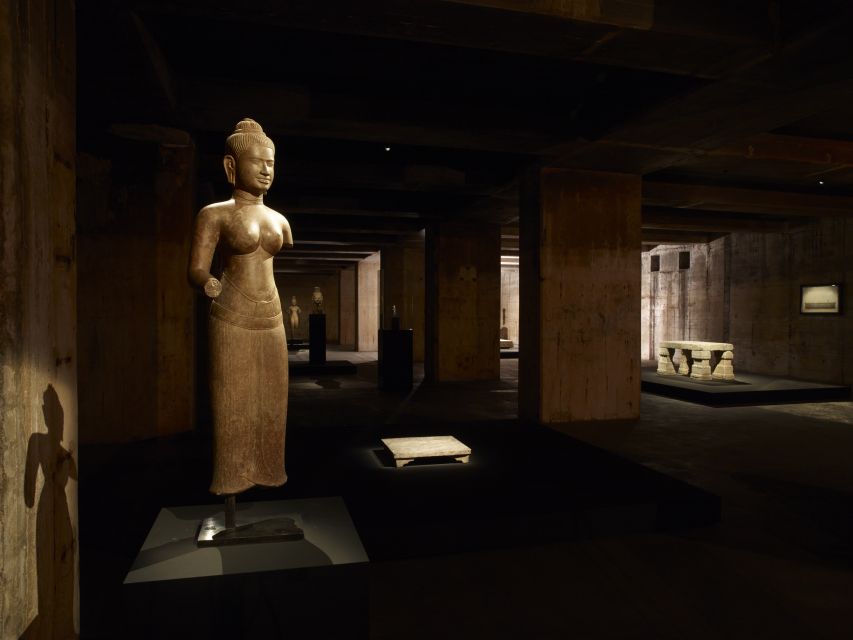
The experience is easy to approach because the format is simple. You’re not hunting for a meet-up point for a long walking tour. You’re heading to The Feuerle Collection for a meditation session, and the route inside follows the flow: you pass through the Sound Room passage, then you walk into the underground Lake Room, with stops for quiet contemplation among the artworks.
One detail that matters: the collection is open only for this meditation experience. So you’re not just arriving and wandering whenever you feel like it. You’ll want to treat the session like a timed ritual. Show up with enough breathing room to feel ready, not rushed.
The atmosphere tends toward small-group quiet rather than a crowded museum stampede. That matters because meditation works only if you aren’t constantly adjusting to other people’s noise and movement. If you’re the type who values calm, this format is built for you.
The Sound Room passage: your first shift from busy to still
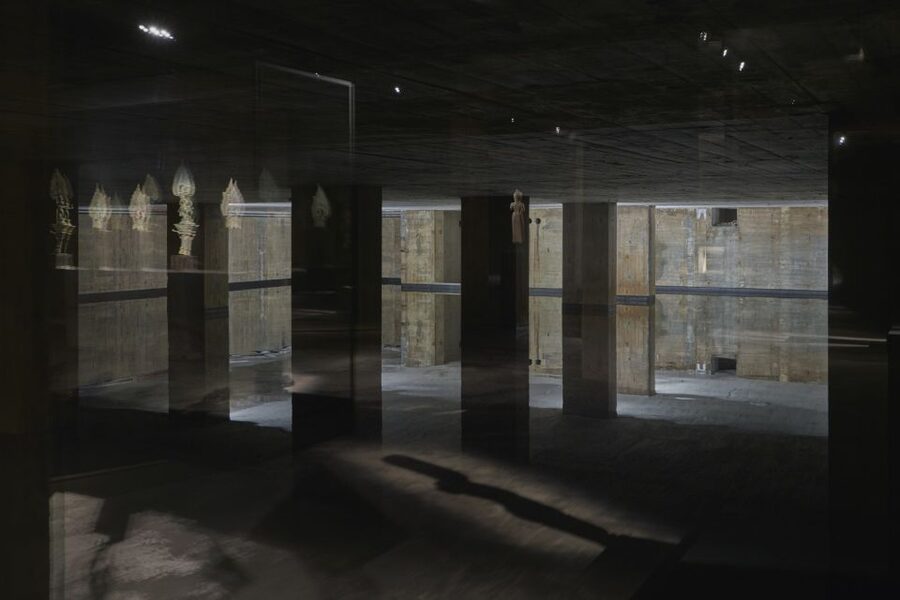
The route starts with moving through the Sound Room and then continuing toward the underground Lake Room. Even though you’re not given a guided tour explanation, that first transition is still part of the experience.
Here’s how to use it well: treat the Sound Room passage as a “gear change.” When you enter, let your pace drop. Walk slower than normal. Keep your attention on the room itself—how it sounds, how it feels underfoot, and how your body settles once you stop performing.
Because this experience is silent by design, you may notice how different your thoughts feel after you’ve stopped talking for a few minutes. That shift is often the point. Instead of seeking a guide to tell you what the art means, you give your own mind less to do.
A possible challenge: if you’re restless, you might feel like an hour is too long before anything really happens. But in this format, the “happening” is the mental reset. If you go in expecting a lecture, you’ll wait. If you go in expecting quiet, you’ll feel it right away.
Underground Lake Room: where quiet contemplation gets physical
Then you walk into the underground Lake Room, which is a major part of the emotional tone. Underground spaces naturally change your sense of time and volume. Even if you’re not consciously thinking about it, your body adjusts—your footsteps sound different, your breathing feels louder, and your attention tightens.
You’re meant to stop and meditate among the artworks here. That’s where the included mat and blanket start to make sense. You can sit or get comfortable enough to stay with one view for a few minutes instead of constantly readjusting.
How to approach this room:
- Choose one spot and stay there for a bit. Let your eyes scan slowly rather than flick.
- If you’re not doing formal meditation, just use the stillness as a way to look longer.
- Keep your phone stowed and your notifications off. This is built as a mobile detox, so treat it like one.
One drawback to keep in mind: the room is part of an intentional sequence. If you want to bounce between rooms whenever you like, this format may feel more structured than expected. The experience is meant to flow.
The art mix: Khmer sculpture, Imperial Chinese furniture, and major contemporary names
One of the most interesting things here is the artwork range. You’re not only seeing one art world. You’re seeing multiple eras and collecting styles placed close enough that your brain starts making connections.
You’ll encounter:
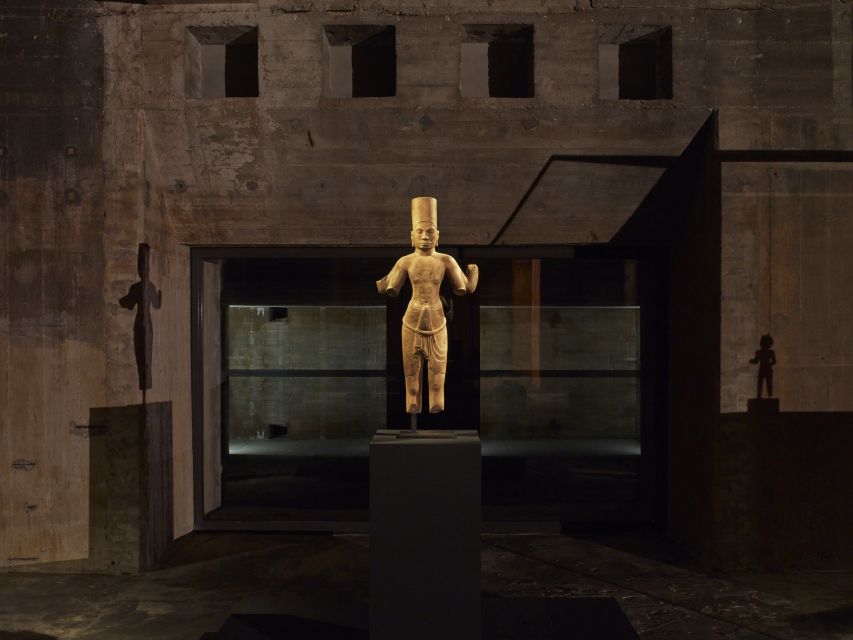
- Early Khmer sculptures (7th–13th century A.D.)
- Imperial and Scholar Chinese furniture (2nd century B.C.–17th century A.D.)
- Contemporary works by Anish Kapoor, Cristina Iglesias, Adam Fuss, Zeng Fanzhi, James Lee Byars, and Nobuyoshi Araki
That last list is a big reason this experience can work for more than one kind of art lover. You get early art objects with long time depth, then you meet big contemporary figures whose work can feel conceptual, emotional, or provocative depending on your taste. Sitting with that combination in silence often makes it easier to let the art be strange without needing to win an argument with yourself.
Also, because this isn’t a guided tour, you get to choose your own interpretation. That can be liberating. You might focus on shapes, materials, and the feeling of craftsmanship—especially with furniture, where design is meant to support living and ritual. With sculpture, you might notice how presence changes when you stop rushing past it.
And yes, some of the names (like Nobuyoshi Araki and others) can carry themes that people associate with erotic art or boundary-pushing contemporary work. The key point for your expectations: you’re not in a purely soothing art bubble. It can be calm, but it isn’t necessarily bland.
Meditation optional: how to do it if you’re new or uninterested
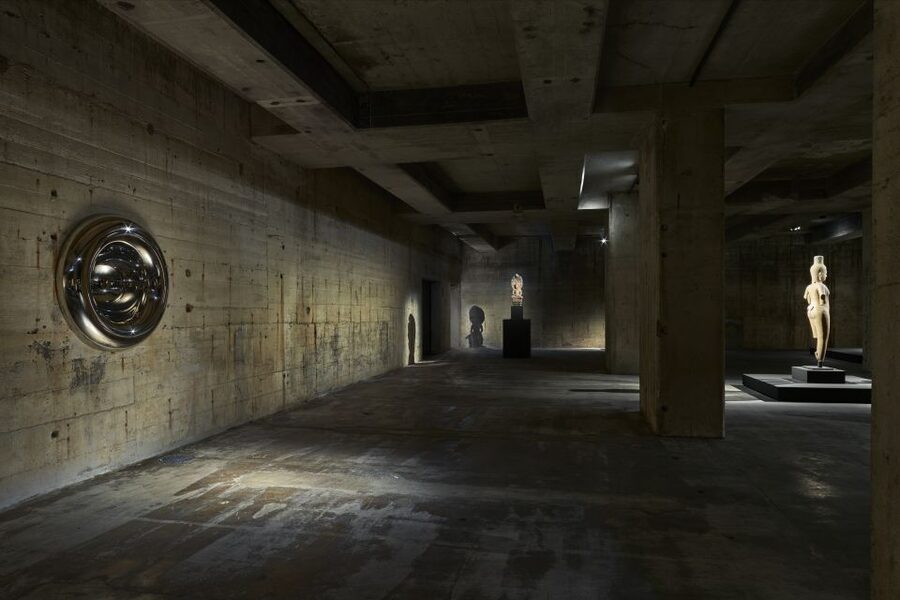
You don’t have to meditate here. The experience is designed for open meditation, but you can also choose quiet walking and simply enjoying the art.
So you have options, and that’s important. If you’re experienced with meditation, you can go all-in and treat the hour as focused practice: breathing, stillness, and repeated attention. If you’re not, you can do a lighter version that still works.
A practical approach that usually helps:
- Sit for 10–15 minutes early on. Don’t plan to sit the whole hour. Build success.
- If your mind runs, don’t fight it. Return your attention to the art object in front of you or to the physical sensations of sitting.
- If you’d rather move, do slow walking. Use the quiet to look longer at each piece.
What makes this valuable is that it doesn’t punish you for not being zen. You’re allowed to be a regular person in a quiet room. The only real requirement is respecting the silence and the meditation setting.
One more practical detail: yoga mat and blanket are included. That means you can dress for comfort and still show up ready to sit. You’ll probably like this more if you wear clothes that let you settle without fighting your waistband or stiff shoes.
Who should book this, and who might want a different plan
This experience fits best if you want art with quiet time attached.
You’ll likely love it if:
- You like museums but want a break from noise and explanations
- You enjoy the idea of a silent mobile-detox
- You’re curious about Khmer sculpture, Chinese furniture, and major contemporary art names
- You’re comfortable spending an hour mostly in stillness
You might want to skip it if:
- You want a guided interpretation with a talk and Q&A
- You’re traveling with children under 16, because it isn’t suitable for them
- You need a high-energy, interactive format
Also, because the collection is open only for meditation, this isn’t a good “I’ll just pop in” activity. Plan for the hour, then let the experience do its job.
Should you book the Feuerle Collection Meditation Experience?
Yes—if you want a Berlin art stop that feels calmer and stranger than the typical museum routine. The strongest reason to book is the combination of silence, time, and art variety. For $25 and one hour, you get a structured way to slow down, plus comfort items, plus a meaningful route that includes the Sound Room passage and the underground Lake Room.
Don’t book it if you’re hunting for a traditional guided tour. The collection is open only for meditation, and the experience isn’t built around explanations. If you’re okay with that, you’ll probably appreciate it a lot more than you expected.
FAQ
FAQ
How long is the Feuerle Collection Meditation Experience?
It lasts 1 hour.
How much does it cost?
The price is $25 per person.
Is this experience a guided tour?
No. It is not a guided tour. The collection is open for meditation.
Is meditation mandatory?
No. Meditation is not mandatory. You can also walk around quietly and simply enjoy the art.
What rooms are part of the experience?
You pass through the Sound Room and walk into the underground Lake Room.
What art styles and periods can I expect to see?
You can expect early Khmer sculptures (7th–13th century A.D.) and Imperial and Scholar Chinese furniture (2nd century B.C.–17th century A.D.), plus contemporary works.
Which contemporary artists might appear in the exhibition?
The information provided lists works by Anish Kapoor, Cristina Iglesias, Adam Fuss, Zeng Fanzhi, James Lee Byars, and Nobuyoshi Araki.
What’s included in the ticket?
A yoga mat and a blanket are included.
Is the experience suitable for children?
No. It is not suitable for children under 16 years.
Is wheelchair access available?
Yes, the experience is wheelchair accessible.