REVIEW · KO TAO
Koh Tao: Yoga Class In Paradise – All Levels Welcome!
Book on GetYourGuide →Operated by Ocean Sound Dive + Yoga · Bookable on GetYourGuide
A yoga class on Koh Tao sounds simple, but this one is built for real variety: different styles for different days. I like that it’s an all-level welcome setup, and I also like that you get the basics covered with mats, props, and water so you’re not scrambling before class.
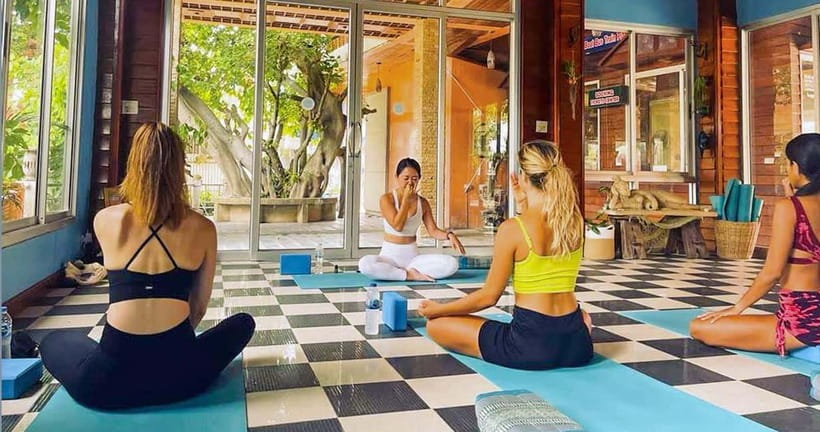
One thing to keep in mind: the room can run very hot (fans, no air con), so if you’re brand new to yoga and still figuring out your comfort level, plan accordingly.
You’ll likely do this in an English-taught class led by the studio team (Franny was mentioned in a recent review), with daily sessions that move between Vinyasa Flow, Hatha Flow, and Yin Yoga. The mix is the point. If you want a steady stretch-and-reset without a huge learning curve, you’ll get it, but you’ll want to respect the heat.
In This Review
- Key Highlights You’ll Actually Care About
- Finding The Blue-Roof Studio Near 7/11 (So You Don’t Lose Time)
- The 1-Hour Class Format: What You’ll Do From Start to Finish
- Choosing Between Vinyasa Flow, Hatha Flow, and Yin Yoga
- Vinyasa Flow: Breath + Movement for Heat and Strength
- Hatha Flow: Slower, More Mindful, Alignment-Focused
- Yin Yoga: Long Holds for Joints, Fascia, and Recovery
- Studio Setup: Mats, Props, Water, and a Class That Doesn’t Start With Stress
- Instructor and Language: English Teaching That Keeps Things Friendly
- A Note on the Heat: When the Room Gets Hot, Plan Smarter
- Who This Class Is Best For (And Who Might Think Twice)
- Value for Money: Why $11 for a 1-Hour Studio Class Makes Sense
- Practical Tips That Make Your Class Go Smoothly
- Should You Book This Koh Tao Yoga Class?
- FAQ
- How long is the yoga class?
- Is the class suitable for beginners?
- What yoga styles are offered?
- What’s included in the price?
- Where is the meeting point?
- Is pickup service included?
- Is the instructor’s language English?
Key Highlights You’ll Actually Care About
- All levels welcome: beginners get an inclusive pace and returning practitioners can still work
- Studio equipment provided: mats, props, and water are part of the class
- Three distinct styles: Vinyasa Flow, Hatha Flow, and Yin Yoga in the mix
- 2–5 minute holds in Yin: longer stretches aimed at connective tissue and joints
- Arrive early: settle in 5–10 minutes before, especially in a warm room
- English instruction: the instructor teaches in English
Finding The Blue-Roof Studio Near 7/11 (So You Don’t Lose Time)
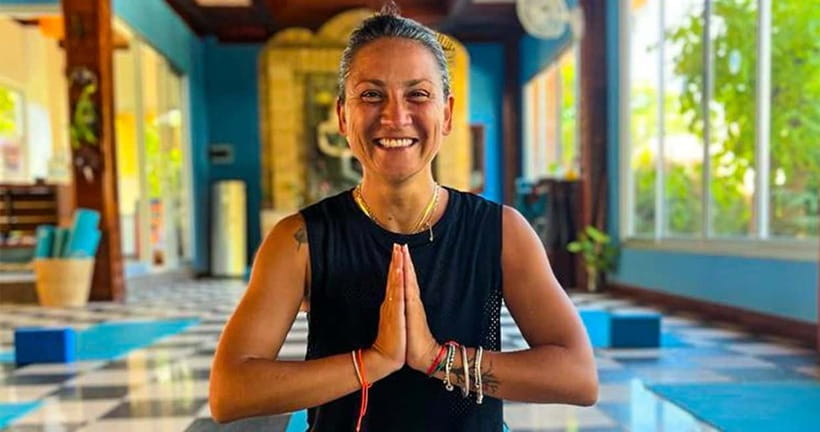
This yoga class meets at a studio near 7/11, close to the currency exchange, under a blue roof. That’s useful because Koh Tao can feel small-but-not-obvious. When you’re warm already and you still have to locate the place, it turns the start of the class into a hassle.
My practical advice: show up early and treat it like part of the experience. You’re told to arrive 5–10 minutes before the session so you can settle in. In a class where heat can be a factor, arriving on time is extra important. You want your body calm and your gear sorted before the first stretch.
If you’re walking over from where you’re staying, don’t rush. Wear comfy clothes you can move in right away, then get ready to feel warmer than usual, not cooler like you might expect from a “vacation activity.”
The 1-Hour Class Format: What You’ll Do From Start to Finish
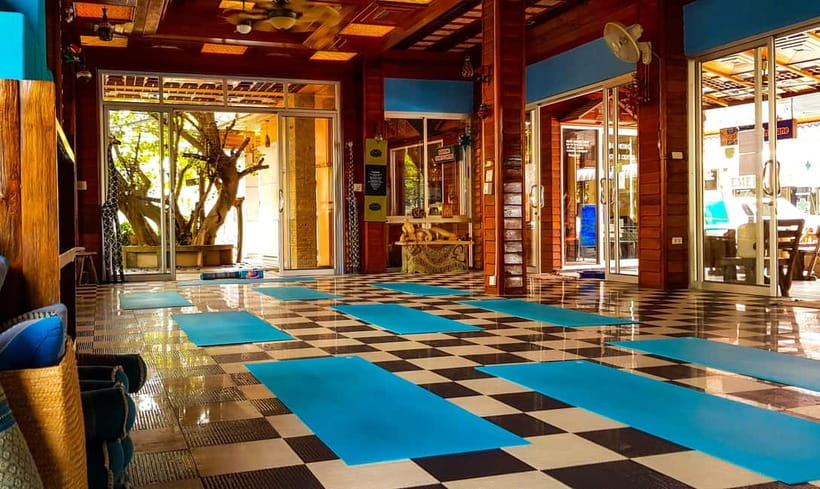
The activity is a 1-hour yoga class, and it’s structured around the style that day. Even without a long itinerary, there’s still a rhythm to expect: you arrive, you set up, you go through the chosen practice, and you finish with a cooling-down/settling phase that fits that style.
Here’s what that means in real terms for your body and energy:
- You’ll flow or hold depending on the style (Vinyasa tends to be more continuous; Yin tends to be longer holds).
- You’ll use studio props if needed, since the session includes the equipment for the class.
- You should expect a warm environment. The class is in a studio setting, and one review specifically notes a hot room with fans and no air conditioning.
If you’re thinking, “Is this just stretching in a room?”—it’s more intentional than that. The styles offered aren’t random. They’re meant to target different goals: energy and breath connection (Vinyasa), alignment and mindful posture (Hatha Flow), or slower recovery through deep, sustained stillness (Yin Yoga).
Choosing Between Vinyasa Flow, Hatha Flow, and Yin Yoga
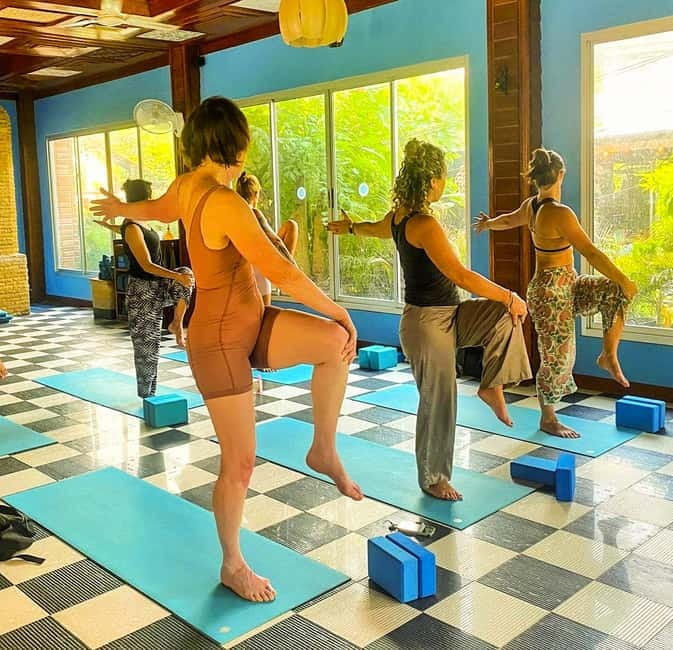
A big part of the value here is that you can pick the practice that matches your day. Koh Tao’s weather and your energy level can swing. One day you might want movement and heat. Another day you might want quiet release.
Vinyasa Flow: Breath + Movement for Heat and Strength
Vinyasa Flow is the more dynamic option. The class focuses on breath-connected movement, building heat while working strength and flexibility. Expect a sequence style that keeps you moving through connected postures rather than stopping for long holds.
This is the one I’d choose if:
- you want to wake up your body,
- you like a clear pace,
- you’re comfortable being a bit challenged physically.
Hatha Flow: Slower, More Mindful, Alignment-Focused
Hatha Flow is slower paced and blends gentle movement with intentional breath and posture holds. It mixes traditional Hatha ideas with modern transitions, so you still move, but you’re encouraged to pay attention to alignment and body awareness.
Pick Hatha Flow if:
- you want something steady but less intense than Vinyasa,
- you like focusing on form,
- you’re building confidence in basics like posture and breathing.
Yin Yoga: Long Holds for Joints, Fascia, and Recovery
Yin Yoga is calming and cooling. Postures are held for longer periods, typically 2–5 minutes, targeting connective tissue, joints, and fascia. Yin is also about patience and surrender, which can feel surprisingly hard if your mind wants to “fix” your body right away.
Choose Yin if:
- you want recovery after heat, swimming, or travel,
- your muscles feel tight but you don’t want a workout vibe,
- you like stillness and letting tension soften.
Studio Setup: Mats, Props, Water, and a Class That Doesn’t Start With Stress
This is one of the most practical things about the experience: the class includes what you need. You’re provided with yoga mats, props, and water, plus all equipment needed for the session.
That matters because the real friction of yoga on vacation is usually logistics:
- finding a mat,
- dealing with limited gear,
- arriving flustered.
Here, you can focus on the practice instead of solving problems before the first minute. You’re still responsible for your comfort—especially in a hot studio—but you won’t be hunting for basic gear.
One more detail that’s easy to miss: you’re encouraged to bring a towel for personal use. That’s not just for hygiene. It also helps you stay comfortable when the room runs warm. If you sweat easily, pack a towel even if you don’t usually.
Instructor and Language: English Teaching That Keeps Things Friendly
The class is taught by an instructor in English. That makes it accessible without the usual “I can’t tell what to do” problem. You’ll be able to follow cues and transitions without guessing.
The most praised aspect in the feedback I saw was the instructor’s style: one recent review singled out Franny for being pedagogical and kind, which tells me the teaching approach leans supportive rather than strict.
In practical terms, that means:
- you can ask yourself, what should I feel here?
- you can use the props if something doesn’t feel right,
- you can adapt without feeling like you’re falling behind.
A Note on the Heat: When the Room Gets Hot, Plan Smarter
One review raised a clear consideration: the room can be very hot, with fans but no air conditioning. That doesn’t automatically ruin the class, but it changes what “all levels welcome” should mean for you.
If you’re new to yoga, your body may not yet know the difference between working and overheating. If you’re returning to yoga, you might be more comfortable adjusting your effort.
My advice to handle the heat well:
- Wear breathable clothing you can tolerate in warm air.
- Use your towel. Keep it where you can grab it quickly.
- Don’t force maximum range of motion. In warm conditions, you can accidentally push too far.
- If you feel dizzy or overheated, take a slower step back in the posture and focus on breath.
Heat can actually help flexibility and reduce stiffness, but only if your breathing stays steady.
Who This Class Is Best For (And Who Might Think Twice)
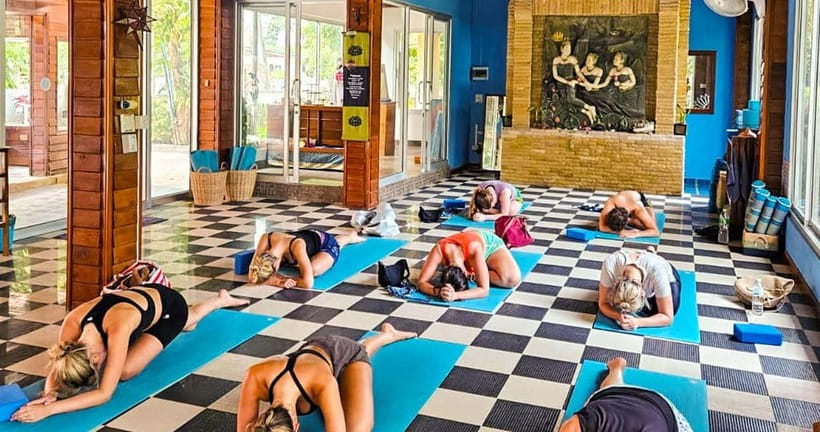
This is a good fit if you want a simple, repeatable yoga routine while staying on Koh Tao. It’s all levels and the studio includes gear, so you can jump in without planning a whole gear checklist.
I’d especially recommend it for:
- beginners who want an inclusive, supportive first class (and who can handle warm indoor conditions),
- experienced yogis looking for a quick daily reset in a studio setting,
- travelers who want a practical “do this at 10am” activity instead of a half-day tour.
I’d think twice if:
- you’re very heat-sensitive,
- you’re hoping for a cool, air-conditioned studio workout,
- you want a highly individualized class (this is still a standard group session).
Value for Money: Why $11 for a 1-Hour Studio Class Makes Sense
At around $11 per person for a 1-hour class, the value is strong for a few reasons:
- You get the full session with an instructor for the whole hour.
- You don’t have to rent or provide your own mat and props.
- You’re also given water, which is one less purchase or logistical step.
Yoga lessons often cost much more in many tourist areas, and the hidden cost is usually gear. Here, that cost is handled for you. You’re paying for time, teaching, and a structured practice in a location you can easily reach near the main commercial area.
So if you’re deciding between a yoga class and another generic activity, this is the one where your body benefits directly, and you can repeat it if you like how the studio feels.
Practical Tips That Make Your Class Go Smoothly
These are the small things that keep your experience comfortable and stress-free:
- Wear comfortable clothing you can move in.
- Bring a towel for personal use (especially in a warm room).
- Arrive 5–10 minutes early so you can settle in.
- Drink water before you go, too. Water is provided, but you don’t want to start the class already slightly dehydrated.
- Choose the style that matches your mood: Vinyasa for energy, Hatha Flow for steady alignment, Yin for recovery.
Also, since the instructor teaches in English, you can use that to your advantage. If you’re unsure about how a posture should feel, pay attention to breath and alignment cues. You don’t need to be perfect. You need to be safe.
Should You Book This Koh Tao Yoga Class?
If you want a straightforward yoga session in Koh Tao that’s beginner-friendly, gear-provided, and offered in multiple styles, I think it’s worth booking. The price is fair, and the setup removes the common friction points.
Book it if you:
- want daily-friendly flexibility (a practice you can do more than once),
- like the idea of switching between Vinyasa, Hatha Flow, and Yin Yoga,
- want English instruction and a supportive vibe.
Skip it or be cautious if you:
- cannot handle a hot studio environment,
- require air-conditioned comfort to practice comfortably,
- are expecting an outdoor or cool-by-the-water yoga experience.
FAQ
How long is the yoga class?
It’s a 1-hour yoga class.
Is the class suitable for beginners?
Yes. The class is advertised as welcome for all levels, including beginners.
What yoga styles are offered?
The studio runs different styles including Vinyasa Flow, Hatha Flow, and Yin Yoga.
What’s included in the price?
You get yoga mats, water, and all necessary equipment for the session, plus an instructor.
Where is the meeting point?
The meeting point is at the Yoga Studio near 7/11, near the currency exchange, under the blue roof.
Is pickup service included?
No pickup service is included.
Is the instructor’s language English?
Yes, the instructor teaches in English.