REVIEW · NEW DELHI
Spiritual India – Yoga, Meditation & all about Hinduism
Book on GetYourGuide →Operated by Nidhi Agarwal · Bookable on GetYourGuide
A quiet home can be the best classroom in Delhi. This 4-hour experience with Roopak and Nidhi is built around yoga and Hindu daily rituals—starting with herbal tea and moving through mantras, a home shrine visit, and a hands-on cow shed stop.
I especially like that it’s small-group and question-friendly, so you’re not stuck watching from the sidelines. I also like the focus on practical explanations, from why the number 108 matters to why Hinduism includes so many gods and what those ideas mean in everyday life.
One consideration: since the whole experience happens at the guides’ home, you should expect strict home rules around food and alcohol (and respect the vegetarian-only context). If you’re hoping for a party vibe or mixed dining, this isn’t that kind of tour.
In This Review
- Key Highlights You’ll Feel Right Away
- Spiritual India in Delhi: What This 4-Hour Visit Actually Means
- Meeting Point, Timing, and How to Plan Your Day
- The Welcome: Herbal Tea and a Calm Start
- Yoga Session: Movement With Room for Your Level
- Hindu Traditions and a Home Shrine Visit: Seeing Faith as Daily Life
- Mantras, Sacred Sounds, and the Feeling of Participation
- The Number 108: Spiritual Math You Can Explain
- Cow Shed Visit: Why It’s More Than a Photo Stop
- Q&A Time With Roopak and Nidhi: Getting Past Surface Confusion
- Value for $38: Why This Price Feels Fair
- Safety and Comfort for Solo Women: Why the Format Helps
- Food and Home Rules: What to Expect Before You Go
- Who Should Book This (and Who Might Not Love It)
- Should You Book Spiritual India With Roopak and Nidhi?
- FAQ
- What is the duration of the experience?
- Is the tour conducted in English?
- How big is the group?
- What’s included in the price?
- Where is the meeting point?
- Are there any food or alcohol restrictions?
Key Highlights You’ll Feel Right Away

- Yoga with an instructor designed for all levels, plus breathing and a real mental reset
- Mantra chanting explained in simple terms, then practiced so you can feel the rhythm
- A Hindu family home visit, including time at their personal shrine and daily-faith details
- Guided answers on big questions like 108, Sanskrit, vegetarian food, and why Ganga is sacred
- Cow feeding at a nearby shed, with a clear explanation of how cows fit into Hindu daily devotion
Spiritual India in Delhi: What This 4-Hour Visit Actually Means
If you’re coming to Delhi, it’s easy to spend your time on monuments and museums. This experience goes a different direction. Instead of treating Hindu spirituality like a sightseeing stop, it treats it like a lived practice—something you’ll see in small moments: a shrine, a routine, a chant, and how people talk about belief.
The biggest reason this works well is the format. You start calm and focused, then you learn by doing. You’ll begin with herbal tea in a serene setting, move into a yoga session, then shift into Hindu customs in the guides’ home. After that, you get guided mantra chanting, a discussion of sacred concepts like 108, and a practical visit to a cow shed where you can feed the cows by hand. It ends with a Q&A so your questions don’t get buried under “tour-speak.”
Another smart part: you’re not squeezed into a huge group. It’s limited to 6 participants, with English live guidance from Roopak and Nidhi. That kind of small setting makes it easier to ask direct questions—especially when the topics are personal or culturally sensitive.
You can also read our reviews of more tours and experiences in New Delhi.

Meeting Point, Timing, and How to Plan Your Day

The meeting point is Sanskriti Apartment, Sector 19B, Dwarka, Delhi 110075. You can reach it by Uber or taxi, and you’ll get detailed instructions from the guide after booking. If you prefer public transport, you can also reach the guides’ home via metro—then the guide can pick you up and drop you back at no extra cost (the home is about 5 minutes by car from the nearest metro station).
Why this matters: Dwarka can be a little out of the tourist center, so having a clear plan saves time and stress. Also, because this is a home-based experience, you’ll want to arrive on time rather than “around time.” A 4-hour window goes fast once you’re in the flow of yoga, chanting, and discussions.
Group size and the time block also help with expectations. This isn’t a 2-hour sampler. It has enough room for movement (yoga), listening (context on Hinduism), participation (mantras), and a clear ending (Q&A plus a souvenir). If you want depth without spending the entire day, this hits a workable middle.
The Welcome: Herbal Tea and a Calm Start

The experience begins the way good spiritual visits often begin: with a pause. You’ll receive a refreshing cup of herbal tea chosen to soothe your senses and prepare you for what comes next.
This sounds simple, but it sets the tone. When a tour starts with a quiet moment, you’re less likely to treat everything that follows as trivia. You’ll be in the right mindset for yoga and for the chanting session later, because you’ve already slowed down.
You’ll also get unlimited bottled water and access to a clean, hygienic washroom. That’s one of those unglamorous details that makes a home visit comfortable—especially if you’re coming from a hot Delhi day.
Yoga Session: Movement With Room for Your Level
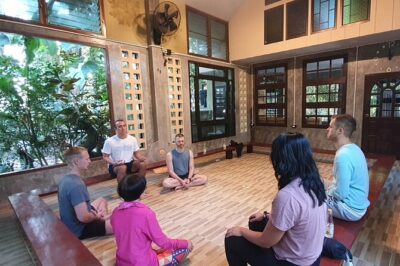
Next comes the yoga class led by an expert instructor. The session is described as tailored to all levels, so you don’t need to arrive as a flexible athlete. Expect you’ll be guided through breathing and stretching, with the focus on connecting with your inner self rather than chasing performance.
This is the kind of yoga session you’ll appreciate if you’re new to yoga or if you’ve practiced before but want a more grounded, spiritual angle. You’re not only doing shapes—you’re preparing your attention for mantra work after.
A practical tip: wear something comfortable enough for movement. Since the tour stays at the guides’ home and includes yoga mat availability (yoga mat included), you can pack lightly. Also, because it’s a small group, you may get more personal adjustment or encouragement if you ask.
Hindu Traditions and a Home Shrine Visit: Seeing Faith as Daily Life
After yoga, you’ll transition into Hindu traditions and customs. The key difference here is that you’re not just learning about rituals in the abstract. You’ll learn about the daily religious practices of a Hindu family and how faith shows up at home.
One of the highlights is visiting their personal shrine. That’s where you’ll likely understand how people structure devotion in a way that feels natural, not theatrical. The tour also focuses on simple, interactive explanations—so questions like why Hinduism is so old, where the word Hindu comes from, and why Hindu traditions include many gods are handled in a way that aims to be easy to understand.
This kind of home-based cultural access is valuable for two reasons. First, it makes Hinduism feel like a system of meaning rather than a set of museum objects. Second, you get to hear the family’s perspective, which is often the fastest route to clearing up confusing stereotypes.
Also, because the guides are Roopak and Nidhi, a married couple with 27+ years, you can feel how this isn’t a one-person script. It’s family life and shared teaching.
Mantras, Sacred Sounds, and the Feeling of Participation
Then you’ll move into mantras and sacred sounds. You’ll discover the significance of ancient Hindu mantras and participate in a guided mantra chanting session.
The practical value of chanting is that it’s experiential learning. You don’t only hear why mantras matter—you practice the rhythm and repetition. Even if you don’t understand every word, you can still connect with the pattern, the pacing, and the intention behind the sound.
The tour also addresses questions around Sanskrit—what it sounds like and why it’s considered difficult to learn. That’s helpful if you’ve ever seen mantras written in English transliterations and wondered why the pronunciation seems inconsistent.
If you’re worried about not knowing the right way to chant, don’t. The whole tour is built as an interactive session with a guide who answers in plain language.
The Number 108: Spiritual Math You Can Explain
One of the topics covered is the significance of 108. You’ll explore why this number shows up in Hindu tradition and what it symbolizes in connection with the universe, nature, and human existence.
I like how this is handled in an educational, question-based format. Instead of asking you to accept 108 as mysticism-only, you’re given context so it becomes something you can explain back to someone else. That’s the difference between “cool trivia” and real understanding.
If numbers and symbols make you curious, you’ll probably get more out of this than the average sightseeing-only traveler. It’s also a topic that connects easily to meditation practice, because repetitive counting and rhythm are part of how many people experience spiritual focus.
Cow Shed Visit: Why It’s More Than a Photo Stop

A standout hands-on moment is the visit to a nearby cow shed. You’ll have the opportunity to feed the cows by hand. It’s not presented as a stunt; it’s connected to what cows represent in Hindu devotion.
You’ll learn about the five products derived from cows and how Hindus view them. That information matters because it explains the religious logic behind why cows are treated with such respect, not just why they look cute in rural photos.
Practical note: follow the guide’s instructions closely, especially around handling animals. And be prepared for a slightly different smell and atmosphere than you’d expect at a clean indoor venue. This is still a safe experience by design, but it’s real life on a working animal site.
Q&A Time With Roopak and Nidhi: Getting Past Surface Confusion

The experience doesn’t end when the tour ends. After the main activities, you’ll have a thoughtful Q&A session.
This is where the tour’s interactive structure pays off. The guide is set up to answer questions in simple ways, including big topics like:
- Why Hinduism hasn’t spread in the same way as newer religions across the globe
- Why Hindus pray to millions of gods and how people think about hierarchy in that idea
- Why Hindu families traditionally eat vegetarian food, and why it’s difficult to be vegan in India
- Why the Ganga is the most sacred river for Hindus, and why cremations happen along its banks in Varanasi
Even if you’re not planning a trip to Varanasi right away, learning why Ganga matters will help you interpret what you see later. It also gives you cultural context that most Delhi sightseeing doesn’t touch.
Value for $38: Why This Price Feels Fair
At $38 per person for 4 hours, this experience is priced like a thoughtful cultural access visit rather than a “performance tour.” The value comes from a few concrete things you get for the time:
- A small group (max 6), which usually means more attention per person
- Yoga mat provided, plus herbal tea and unlimited bottled water
- A visit that includes participation (mantra chanting), not only observation
- A home-based cultural explanation—usually the kind of access that costs more in big-city guided tours
- A souvenir provided at the end
There’s also the practical side. Wi-Fi is included (free Wi-Fi at 5G speed), and you’ll have clean bathroom access. Those details help you stay comfortable so you can focus on learning.
If you’re comparing this to a generic walking tour, it’s different value. This isn’t about covering miles. It’s about covering meaning.
Safety and Comfort for Solo Women: Why the Format Helps
The experience highlights that it’s a safe environment even for female solo travelers. The setup also helps: it’s hosted by a married couple, conducted from their home, and kept small.
Home-based cultural visits can feel intimidating at first if you’re used to hotels and big tour offices. Here, the experience is clearly built around hospitality—welcome tea, hygienic facilities, and English communication—so you’re not left guessing.
That said, you’ll get the best experience if you’re respectful and curious, and if you’re comfortable with the home setting and the fact that it’s not a public attraction.
Food and Home Rules: What to Expect Before You Go
Because this experience happens at Roopak and Nidhi’s home, the rules are specific:
- No liquor at the guide’s home
- No non-veg food allowed at the guide’s home
- No banned substances allowed at the guide’s home
This matters for your planning. If you’re used to grabbing drinks or eating out at random during tours, you’ll need to adjust your expectations. The positive angle is that the tour stays focused on the spiritual theme without distractions.
It’s also why the souvenir + tea + activities work as a complete package. You’re not sent out to find food on your own in the middle of the program.
Who Should Book This (and Who Might Not Love It)
This experience is a good fit if you:
- Want authentic cultural access beyond monuments
- Like hands-on learning through yoga and chanting
- Have questions about Hinduism and want clear, simple answers
- Prefer a small-group setting where you can actually ask stuff
It may be less satisfying if you:
- Want a typical sightseeing itinerary with landmarks
- Expect a casual food-and-drink tour vibe
- Aren’t comfortable with home rules around food and alcohol
Should You Book Spiritual India With Roopak and Nidhi?
I’d recommend this if you’re in Delhi and you want something more personal than standard tours. The combination of yoga, mantra chanting, a home shrine visit, and a Q&A around big questions gives you both experience and explanation. At $38 for 4 hours, in a small group, it feels like practical value—especially if you care about understanding culture instead of just collecting photos.
Book it if you’re curious, respectful, and open to a home-based format. Skip it if you’re looking for nightlife energy or a purely sightseeing day.
If you go, bring comfortable clothes for yoga, come with at least a couple of questions you’ve been carrying (108, Sanskrit, vegetarianism, Ganga—whatever you’re curious about), and treat the session like a real conversation. That’s where the best memories tend to come from.
FAQ
What is the duration of the experience?
The experience lasts 4 hours.
Is the tour conducted in English?
Yes, it’s led by a live tour guide in English.
How big is the group?
It’s a small group limited to 6 participants.
What’s included in the price?
You get a yoga mat, herbal tea, unlimited bottled water, a special souvenir, free Wi-Fi at 5G speed, a clean and hygienic washroom, and free pick-up & drop-off from a metro station (not hotel pick-up).
Where is the meeting point?
The meeting point is Sanskriti Apartment, Sector 19B, Dwarka, Delhi 110075. You’ll receive detailed instructions after booking.
Are there any food or alcohol restrictions?
Yes. At the guide’s home, there is no liquor allowed and no non-veg food allowed.