REVIEW · BEPPU
Private Sound bath Meditation in ocean view house and Beppu onsen
Book on Viator →Operated by Your_beppu_tour · Bookable on Viator
Most people come to Beppu for steam and soak. This adds sound-bath meditation in an ocean-view house, plus nearby hot-spring highlights, all in a compact 2-hour format. I love that it’s truly private, so you can relax without performing or translating your way through it.
I also like the instrument mix and the approach: 432Hz handpans, crystal bowls, singing bowls, and even gank drums (528Hz) for gentle, body-level vibration, not a concert vibe. One consideration: this is wellness-style relaxation, so if you’re only here for hardcore onsen time, you’ll want to plan a separate longer soak.
In This Review
- Key highlights
- Why a Beppu sound bath (and not a concert) feels so right
- Ocean-view music house: what happens during the 60 minutes
- Beppu hot-spring stops: Umi Jigoku and Kannawa steam/onsen area
- Umi Jigoku
- Kannawa Steam Bath
- Kannawa Onsen
- Guided meditation after the sound bath: why it matters
- Optional massage: for when relaxation needs hands
- Price and value: what $57.33 really covers
- Who this is best for (and who should adjust expectations)
- A quick, practical game plan before you go
- Should you book this Beppu private sound bath + onsen combo?
- FAQ
- Is this a private experience?
- How long is the sound bath part?
- What instruments are used in the sound bath?
- What hot-spring areas are included?
- Is there guided meditation?
- Is the experience beginner-friendly?
- Is an optional massage available?
- Where does the tour start and end?
- Is travel insurance included?
Key highlights
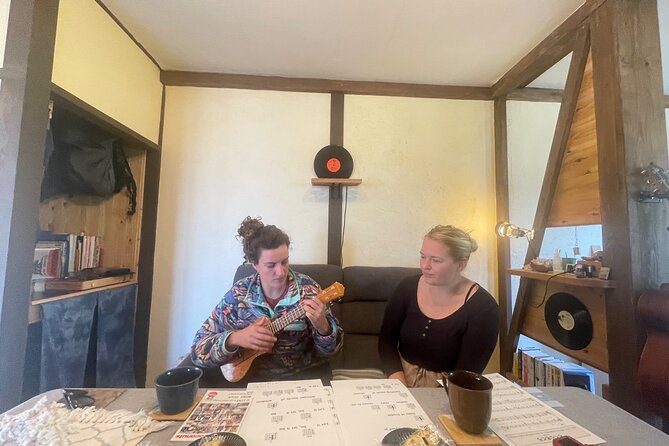
- Private session for your group in a calm ocean-view music house
- 60-minute sound bath using 432Hz handpans, crystal and singing bowls, plus 528Hz gank drums
- Short guided meditation after the main set to help you carry the calm forward
- Beppu hot-spring stops that include Umi Jigoku and the Kannawa steam/onsen area
- English-friendly support with no music or language skills required
- Optional massage after the sound bath if you want extra help unwinding
Why a Beppu sound bath (and not a concert) feels so right
Beppu is famous for geothermal drama: steam vents, sulfurous steam, and pools that look like science experiments. What you don’t always expect is stillness. This experience gives you a different kind of Beppu energy, one that works with your body instead of just sightseeing it.
The sound bath part is designed to be meditative, not a performance. You’re not there to follow a melody or figure out what instrument does what. Instead, the session wraps you in soft, steady vibrations so your nervous system has something simple to latch onto. That matters, because Beppu can be sensory overload if you hit steam and crowds back-to-back.
For me, the “private ocean-view house + harmonic instruments” pairing is the clever part. You start getting grounded by the sound, and then you’re already set up to enjoy the geothermal sights without feeling rushed.
Ocean-view music house: what happens during the 60 minutes
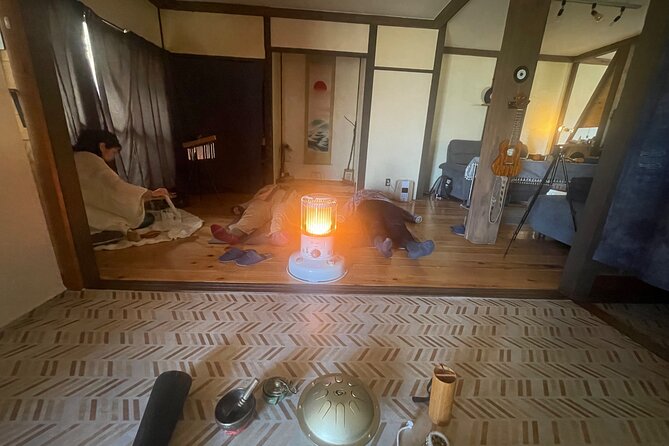
Your session happens in a cozy house with ocean views—an important detail because the whole thing is built around slowing down. Even if you don’t fully know what a sound bath is, you’ll understand the goal quickly: you’ll be surrounded by gentle resonance and guided into a calmer state.
The instruments are part of the method:
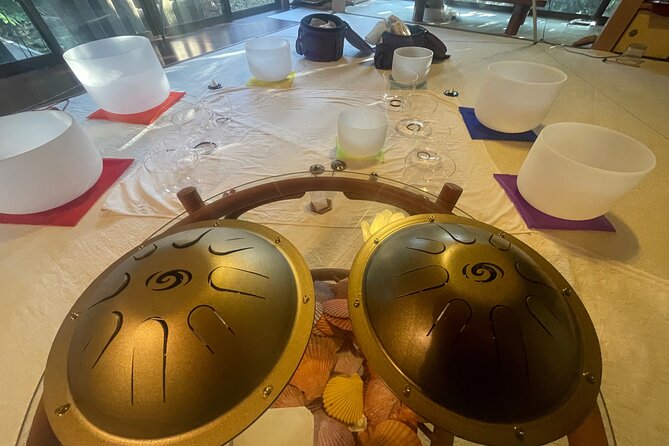
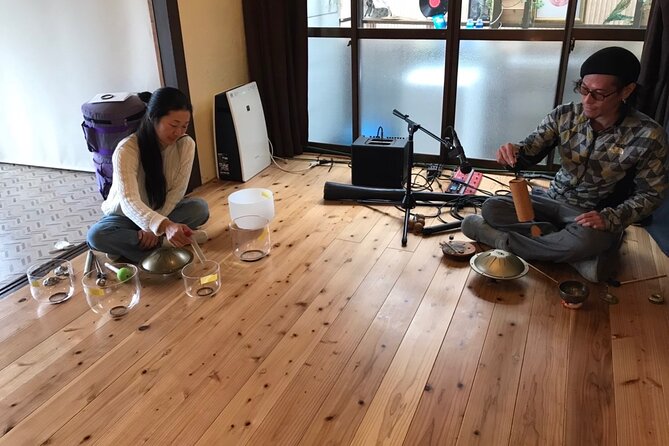
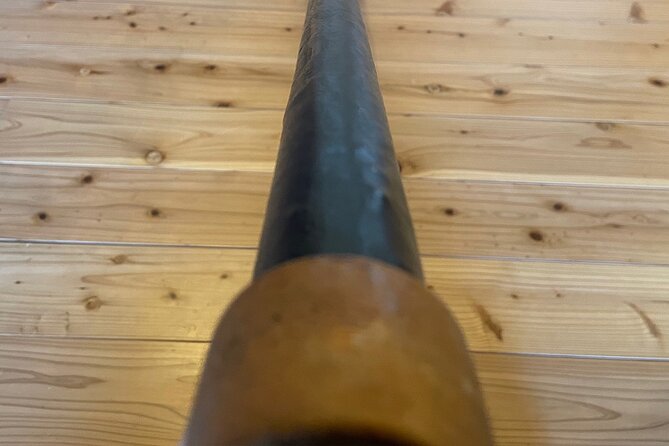
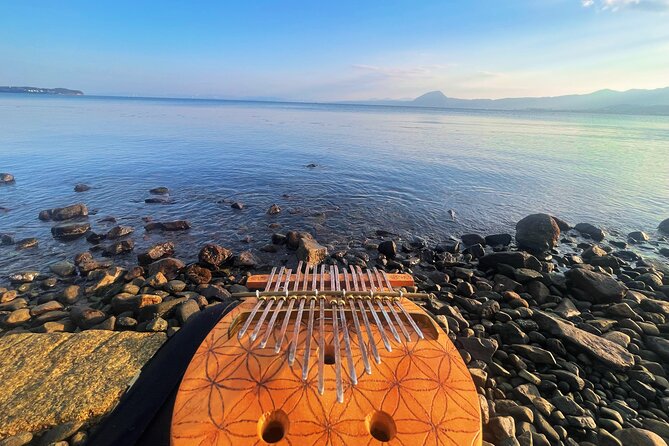
- Handpans tuned to 432Hz, which are used for mellow, flowing vibration
- Crystal and singing bowls, which create sustained tones that feel like they hang in the air
- Gank drums tuned to 528Hz, adding a deeper rhythmic layer rather than bright, attention-grabbing sound
What I like about this setup is that it avoids extremes. It’s not too quiet (you still get the effect), and it’s not loud enough to feel harsh. You’re basically giving your ears—and your body—a steady signal.
No musical knowledge is needed. You don’t have to read anything. You just show up in comfortable clothing and let the sound do the work.
Beppu hot-spring stops: Umi Jigoku and Kannawa steam/onsen area
This outing isn’t only about sound. It also takes you to some of Beppu’s best-known hot-spring zones, which is where the day makes sense for first-time visitors.
You’ll visit three main stops:
Umi Jigoku
Umi Jigoku means sea hell, and the nickname is earned. The water can look dark and thick, like something alive underneath. Even if you’ve seen geothermal sites elsewhere in Japan, this one has a distinctive visual punch.
The value here is orientation. After you see Umi Jigoku, you’ll start noticing how Beppu’s steam and mineral water shape everything around it—streets, steam patterns, and the way locals organize space around the heat.
Tip: don’t treat this like a quick photo stop. Take a minute to look at how steam behaves over time. It helps the rest of the outing feel less chaotic.
Kannawa Steam Bath
Kannawa is where Beppu’s geothermal power becomes obvious fast. A steam bath scene has that live, industrial feel—heat coming out of the ground, pipes and structures doing practical work, and the smell that tells you the location is real.
This stop adds contrast. You’re moving from sound vibration in a calm space to open, physical geothermal energy. That contrast can actually make the relaxation session feel more effective afterward.
Consideration: steam areas can be intense for people who dislike strong odors or heavy heat. If that’s you, plan your pace.
Kannawa Onsen
Kannawa also includes the onsen side of the area, tying the geothermal show to the everyday ritual of soaking. Even when your time there is more of an onsen intro than a long soak, it gives you the context to understand why locals plan their days around these waters.
Important practical note: the experience includes an intro to nearby hot springs and points you toward peaceful local options, but the data you have doesn’t specify if onsen entry fees or specific bath access are fully covered. If you’re trying to guarantee a certain soak length, ask in advance when you book.
Guided meditation after the sound bath: why it matters
The sound bath is the main event: 60 minutes of vibration-led relaxation. But the session doesn’t end when the instruments stop. You get a short guided meditation right after.
That short piece is more useful than it sounds. Sound baths can be like a reset button—you feel better during the tones—but it’s easy to lose the effect once you stand up and re-enter normal noise. A brief guided meditation helps you bridge from “relaxed body” to “relaxed brain.”
If you’re a beginner, this part is also low-pressure. You’re not asked to do anything complicated. The guidance is meant to be simple and accessible.
Optional massage: for when relaxation needs hands
After the sound bath, you have the option to add a massage with Beppu professionals. Since your main session already focuses on stress relief through sound, the massage option makes sense if you want the physical side of relaxation to continue.
The key idea: don’t treat this as a replacement for your body’s needs. If you’ve been walking a lot, or you’re carrying tension from travel, the massage can help translate that calm into something you feel longer.
One caution: massage timing can add to how quickly you wrap up the day. If you have dinner plans or a train you must catch soon after, check the timing when you confirm your slot.
Price and value: what $57.33 really covers
At about $57.33 per person for an approximately 2-hour experience, the value comes from more than just the instruments. You’re paying for a structured wellness session plus the added local sights.
Here’s what you get for that price:
- a private sound bath experience for your group
- the guided meditation
- an introduction to nearby hot springs and peaceful local spots
- English-friendly support
- (optionally) a post-session massage
That combination is what makes it competitive. Many Beppu activities focus on one thing—steam, onsen culture, or a single workshop-style experience. This stacks relaxation and geothermal context in one go.
One extra planning detail that surprised me: this type of session tends to sell well early. The average booking timeline is around 95 days in advance, so if you’re traveling in peak season or on a specific day, lock it in sooner rather than later.
Who this is best for (and who should adjust expectations)
This experience is a great match if you:
- want a calm, beginner-friendly wellness activity while in Japan
- like the idea of 432Hz and 528Hz sound tools for stress relief
- plan to see Beppu’s hot-spring sights anyway and want a reset in the middle or after
- prefer private tours over group schedules
- would appreciate English-friendly support and simple participation
You might rethink it if you’re looking for:
- a long onsen soak as the main goal (this includes intro time, not a full day spa scenario based on the info provided)
- a strictly sightseeing-heavy, step-by-step history tour (this is wellness-centered, even when you’re visiting key geothermal spots)
A quick, practical game plan before you go
A few details will help you enjoy the session more:
- Wear comfortable clothing you can sit or relax in.
- Arrive a few minutes early so you don’t feel rushed when it’s time to settle.
- Bring a mindset shift: treat the sound bath as a body-first experience, not a show.
Also, if you’re sensitive to steam or strong geothermal smells, pace yourself at the Kannawa stops. You’re not competing for the fastest photos—you’re building a day that feels good.
Should you book this Beppu private sound bath + onsen combo?
If you want Beppu without only chasing steam and crowds, I’d book it. The session is built for real relaxation: private, beginner-friendly, and centered on vibration-led calm with a short guided meditation afterward. Adding Umi Jigoku and the Kannawa area gives you the local geothermal context so the day feels complete, not random.
My only reason to hesitate would be if your main goal is a long, multi-hour onsen ritual or if you strongly dislike any steam or mineral-smell exposure. If that’s not you, this is a smart value play for a quieter side of Beppu.
FAQ
Is this a private experience?
Yes. It’s listed as a private tour/activity, meaning only your group participates.
How long is the sound bath part?
The sound bath session is about 60 minutes, and the total experience runs about 2 hours.
What instruments are used in the sound bath?
The session uses harmonic instruments such as 432Hz handpans, crystal bowls, singing bowls, gank drums (528Hz), and more.
What hot-spring areas are included?
The experience includes stops at Umi Jigoku, Kannawa Steam Bath, and Kannawa Onsen.
Is there guided meditation?
Yes. After the sound bath session, you’ll receive a short guided meditation.
Is the experience beginner-friendly?
Yes. You don’t need any music skills or language skills. English-friendly support is included.
Is an optional massage available?
Yes. There is an optional massage after the sound bath.
Where does the tour start and end?
The tour starts at 492 Kamegawachūōmachi, Beppu, Oita 874-0021, Japan and ends back at the meeting point.
Is travel insurance included?
No. The activity does not include insurance, so you should have valid travel insurance for personal injuries, accidents, or health issues.