REVIEW · BANGKOK
Yoga in the Park Thailand
Book on Viator →Operated by Yoga In The Park · Bookable on Viator
Yoga in Bangkok, with lizards in the air. This small-group morning yoga session takes place in Lumphini Park, right in the middle of the city, where you can swap skyscrapers for lake views and tree shade. Expect a calm start with meditation and breathing before moving into strengthening, healing-style flows.
What I really like is the small class size (up to 4 people). That headspace matters in a park class: you get personal guidance and you are not rushed through poses. I also like that the instruction is designed to fit your level, whether you are brand-new or working on a steady practice.
One thing to consider: this is an outdoor activity, so good weather matters. If it gets rainy, you might still train (I’ve seen sessions go ahead despite rain), but you should be ready for damp grass and plan accordingly.
In This Review
- Key things worth knowing before you stretch
- Where it happens: Lumphini Park in the center of Bangkok
- Your morning flow: meditation and pranayama before the poses
- Strengthening and healing work that actually feels usable
- Instructors make the difference: Sung and Gift
- What the 90 minutes looks like, step by step
- Price and value: $38.88 for a small-group park practice
- How to prepare so you get the most out of it
- If you’re a beginner
- If you’re more experienced
- If you have injuries
- What to bring and wear
- Who this yoga class is best for
- Small moments you’ll notice in the park
- Should you book Yoga in the Park Thailand?
- FAQ
- FAQ
- How long is the Yoga in the Park session?
- Where do I meet for the yoga class?
- Is the yoga suitable for beginners?
- What does the session include?
- How large is the class?
- Does the class adapt to my needs?
- Is this experience held outdoors?
- What if the weather is bad?
- How much does it cost and how do I get my ticket?
Key things worth knowing before you stretch
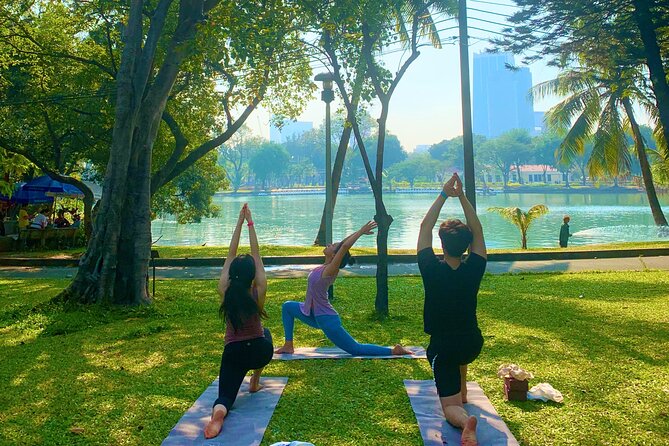
- Up to 4 people means fewer crowds and more one-on-one attention
- Meditation + pranayama come first, so your body starts settling before movement
- A quiet corner of Lumphini Park keeps the city noise down while you practice
- Tailored strengthening and healing work fits beginners through advanced yogis
- Wildlife sightings are part of the experience, including monitor lizards, birds, squirrels, and turtles
- A 90-minute reset is an ideal way to unwind, especially after long flights
Where it happens: Lumphini Park in the center of Bangkok
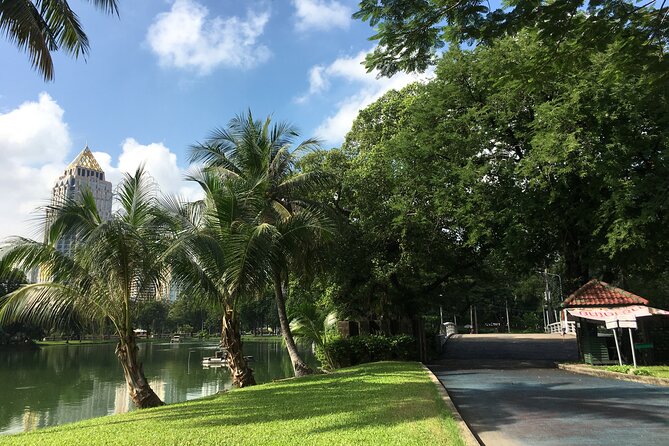
This yoga class uses Lumphini Park as the backdrop, and that is exactly why it feels different from a studio session. You’re practicing in central Bangkok, but you’re not stuck in a gym-like room. The park setting brings in softer cues—water, plants, birds—and it changes how your body responds once you start breathing.
The location is specific and easy to find. You meet at Chai Phatthana Water Aerator Memorial, 192 Thanon Rama IV, Khwaeng Lumphini, Pathum Wan, Krung Thep Maha Nakhon 10330. The activity ends back at the meeting point, so you do not have to worry about a complicated route or getting lost later.
Because this is a park, wildlife is not a gimmick. You may see monitor lizards, plus birds, squirrels, and turtles. It is not guaranteed like a checklist, but the setting is active. I love that it turns your attention outward for a moment—then back inward—without making the class feel interrupted.
You can also read our reviews of more tours and experiences in Bangkok.
Your morning flow: meditation and pranayama before the poses
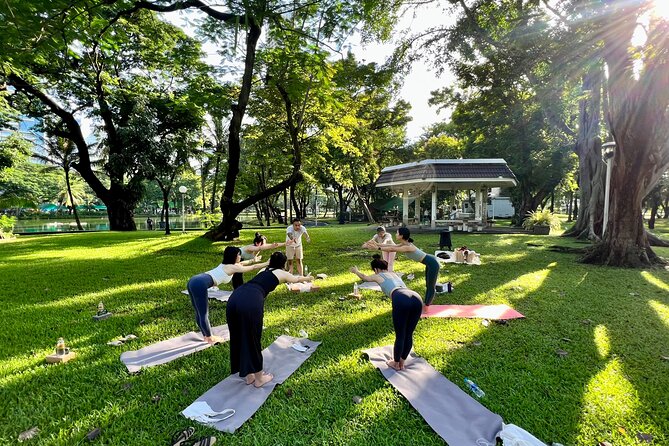
The session starts with a quiet setup. The practice begins with meditation and Pranayama (breathing exercises). In Bangkok, that first step matters. Even a peaceful morning still has movement all around you. Having breathing first helps you tune out the pace of the city before you start stretching.
After you settle, you move into asana flows. This is not described as a competitive practice, and that changes the vibe immediately. You are not chasing a “perfect” form. You’re learning how to use your body—posture, balance, and pain management—through steady, practical work.
The class format also matters: because it’s small, instructors can adjust how they guide you without making you feel singled out. Beginners can be eased in. More experienced yogis can be given options to make the practice feel challenging without turning it into a test.
Strengthening and healing work that actually feels usable
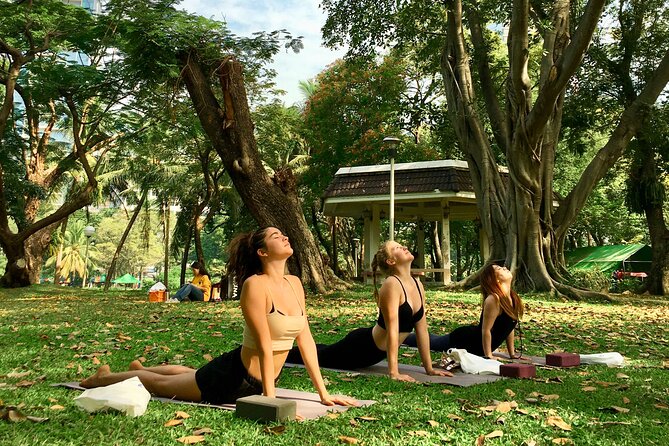
This class includes healing and strengthening exercises, and the way it is explained is exactly what you want from a morning practice. Yoga here is positioned as a tool for improving yourself both inside and out, not as a performance. That theme shows up in how instructors talk about posture and balance: you are learning what your body needs to feel steadier.
You can expect work that supports:
- Better alignment and posture habits
- Balance and stability as you move through poses
- Strength you can feel the next day, but not in a punishing way
Because the class can be tailored to individual needs and skills, you should not assume the session will look the same for everyone. One person might focus on gentle support and comfort. Another might get clearer instructions for strengthening. Both are valid, and the structure is built for that.
Instructors make the difference: Sung and Gift
The strongest signal in the feedback is that the teaching style lands well. Names that show up clearly are Sung and Gift. One review notes a teacher named Sung made the session fantastic, and another highlights Gift as professional and excellent.
What matters for you is not celebrity status—it’s how teaching feels when you’re in a park. In small settings, the instructor becomes your anchor. You’re more likely to get personalized advice, and less likely to feel like you’re just trying to copy shapes in a rush.
A couple of reviews also mention the class feeling not at all rushed, with lots of personalized guidance. That is exactly what you want in an outdoor yoga session, where you might be distracted by space, sounds, or the occasional wildlife moment. A good instructor helps you stay present without cutting your practice short.
What the 90 minutes looks like, step by step
You’re in this for about 1 hour 30 minutes. The description breaks it into a few clear phases, and you’ll feel the progression once you arrive:
1) Meet and settle (about the first few minutes)
Arrive early enough to get set up. Plan to be at least 5 minutes early. Outdoors, you want time to find your spot, manage your personal belongings, and get comfortable before the group starts.
2) Meditation and Pranayama
You begin with breathing and meditation. This is your mental off-ramp from the city. It also warms you up internally, so the following movement feels smoother.
3) Asana flows (movement that builds)
This portion focuses on flows that support healing and strengthening. Expect guidance aimed at posture, balance, and overall body control.
4) Tailored options throughout
Because the class is small, instruction can adjust to your level. Beginners are explicitly welcome, and advanced participants can still be challenged.
5) Wrap-up and return to the meeting point
The activity ends back where you started, so your morning stays simple.
Price and value: $38.88 for a small-group park practice
At $38.88 per person, you’re paying for more than “yoga in a park.” You’re paying for:
- A guided session with meditation, Pranayama, and structured movement
- Tailoring for different skill levels
- The benefit of up to 4 travelers, which increases the chance of real feedback
- A unique setting in Lumphini Park, where wildlife and nature change the feel of the practice
Compared to bigger classes, you’re paying for quality of attention. Compared to private instruction, it’s still group-based, so it’s a lower-cost way to get the benefits of individualized coaching. If you’ve ever taken a class where you spent most of the time guessing, this price is easier to justify because the format is designed to reduce guesswork.
Also, it’s a mobile-ticket setup. That’s small, but it reduces friction when you’re moving through Bangkok.
How to prepare so you get the most out of it
This is for most travelers, but you’ll get better results if you show up thinking practically.
If you’re a beginner
You’re welcome, and the class is described as adaptable. Your job is simple: show up, listen to instructions, and choose the version of each pose that feels safe and supported. The non-competitive framing is there to help you relax instead of pushing too hard.
If you’re more experienced
You may still get challenged, just in a way that respects your body and your level. Ask for options if something feels too easy, and pay attention to form cues. In a small group, your instructor can likely see what you’re doing fast.
If you have injuries
Let the instructor know about any injuries prior to practicing. That matters for both safety and how the “healing” side of the session is adapted.
What to bring and wear
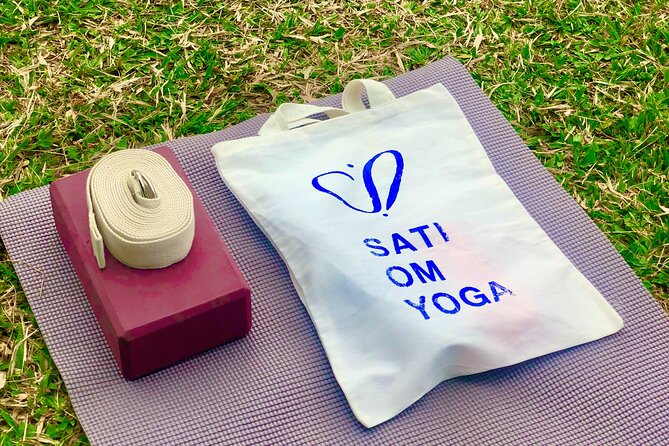
The tour data does not list specific gear, but plan for an outdoor class. Wear something comfortable for movement and be ready for damp grass if weather changes. If rain shows up, one review noted that rain added to the session, so it’s smart to be comfortable practicing in slightly messy conditions.
Who this yoga class is best for
This is a great match if you want:
- A calm morning routine in Bangkok without feeling trapped indoors
- A small group where you can actually get guidance
- A practice that starts with breathing, not just stretching
- A chance to stretch after travel stress—one reviewer specifically mentioned it as a nice reset after a 15-hour flight
- A class that welcomes beginners but still supports stronger practitioners
It may not be ideal if you want a big, high-energy class with lots of people and no adjustments. This is intentionally the opposite: quiet, controlled, and tailored.
Small moments you’ll notice in the park
This experience has a “micro-adventure” feel, mostly because the park is alive. You might see monitor lizards and turtles, and you’ll likely notice birds and squirrels moving around the lakes and plants. The wildlife adds a gentle sense of surprise—then your breath and movement bring you back to focus.
Because the practice happens in a quiet corner in the center of Bangkok, it also gives you a different way to experience the city. You still feel like you’re in Bangkok, but you get a break from the constant motion.
And on top of the scenery, you’re doing something productive: stretching and strengthening that supports posture and balance. That makes the morning feel worthwhile even if you’re not trying to “do everything” on your vacation.
Should you book Yoga in the Park Thailand?
I’d book it if you want a morning activity that blends real relaxation with actual guidance—and you like the idea of practicing in Lumphini Park with a small group. The value is strongest when you care about instruction quality and want a setup that adapts to your level.
Skip it (or at least think twice) if you are very weather-averse. Because it’s outdoors, rain or poor conditions can change how comfortable you feel during the session. If you can handle that with a flexible mindset, this class is a smart, low-stress way to start your day in Bangkok.
FAQ
FAQ
How long is the Yoga in the Park session?
The session is approximately 1 hour 30 minutes.
Where do I meet for the yoga class?
You meet at Chai Phatthana Water Aerator Memorial, 192 Thanon Rama IV, Khwaeng Lumphini, Pathum Wan, Krung Thep Maha Nakhon 10330, Thailand.
Is the yoga suitable for beginners?
Yes. Beginners are welcome, and classes can be tailored to different experience levels.
What does the session include?
It starts with meditation and Pranayama (breathing exercises), then moves into asana flows, including healing and strengthening exercises.
How large is the class?
The maximum group size is 4 travelers.
Does the class adapt to my needs?
Yes. With the small group size, the class can be tailored to individual needs and skills.
Is this experience held outdoors?
Yes. The practice takes place in a quiet corner of Lumphini Park.
What if the weather is bad?
This experience requires good weather. If it’s canceled due to poor weather, you’ll be offered a different date or a full refund.
How much does it cost and how do I get my ticket?
It costs $38.88 per person, and the tour uses a mobile ticket.