REVIEW · INDONESIA
Bali: Open Chakra Healing and Mantra Soul Retreat Cleansing
Book on GetYourGuide →Operated by MyBaliExplore · Bookable on GetYourGuide
Chakra cleansing in Bali feels oddly personal. This 8-hour small-group day mixes mantra singing with temple purification at Pura Mengening, then adds a priest-led chakra opening. An English guide helps translate what you’re doing and why.
I like the hands-on ritual flow: temple purification with mantra and Balinese offerings, plus a priest assisting priest chakra healing. I also appreciate that strong guides (like Komong, Gede, and Adé) walk you through practical ceremony details, including what to do with your hands and what to say.
One possible drawback: it isn’t a “sit back and relax” afternoon. You’ll be around temple water and doing meditation, and food isn’t included, so you’ll want a plan for lunch or snacks.
In This Review
- Key things I’d bet on before you go
- The Big Idea: Mantra, Spring Water, and Chakra Opening
- Pickup From Sideman, Ubud, or Kuta: What the Timing Feels Like
- Pura Mengening: Temple Purification With Mantra and Offerings
- Gianyar Temple Time: Meditating on Fire, Water, and Air
- Meet the Priest: Chakra Healing and the Canang Symbol
- Guide Matters: How Komong, Gede, and Adé Change the Day
- What to Wear and Bring: Sarong Provided, Water Included
- Price and Value: What $70 Buys in an 8-Hour Spiritual Day
- Small Group Energy: Limited to 15 People
- Possible Extras: Waterfall Ceremonies and Coffee-Farm Stops
- Who Should Book This (and Who Might Pass)
- Should You Book This Chakra Healing and Mantra Retreat Day?
- FAQ
- FAQ
- Where does this experience take place in Bali?
- How long is the Bali chakra healing and mantra retreat?
- What is the price per person?
- What are the pickup locations?
- Is there an English-speaking guide?
- How big is the group?
- What’s included, and is food provided?
- Do I need to pay the priest separately?
- What should I bring for the purification at the temple?
Key things I’d bet on before you go
- Small-group limit (15 people) keeps the day from feeling like a production line
- Pura Mengening purification is the core: mantra, offerings, and spring-water ritual time
- Element-based meditation (fire, water, air) turns the experience into something you can actually feel
- Priest-led chakra opening uses Balinese offerings as part of the process
- Practical guidance from your guide helps you follow the ceremony without guessing
- Bring the basics: the water part means planning for flip-flops and a swimsuit
The Big Idea: Mantra, Spring Water, and Chakra Opening
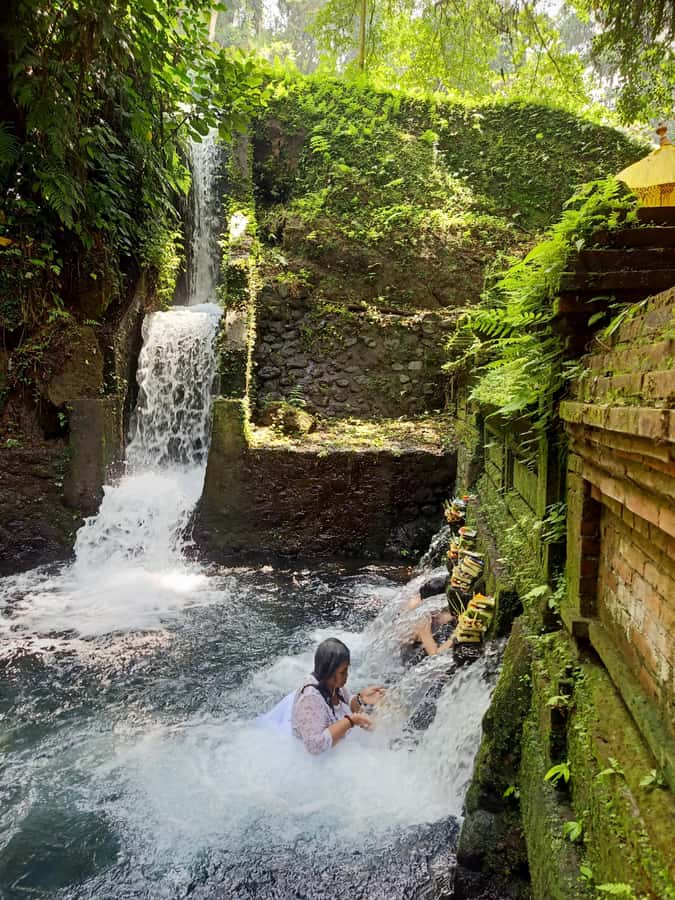
This is a Bali spiritual day built around something tangible: ritual actions you can follow, not just a talk. You’ll spend time at Pura Mengening doing purification with mantra, offerings, and spring water, then shift into chakra work with a priest in the Gianyar area.
What makes this worth your time is the structure. The day pairs culture (temple setting, ceremonies, Balinese offerings) with body-and-breath practices (meditation connected to elements). If you’re the type who wants meaning, but also wants clear instructions, this format tends to land well.
Pickup From Sideman, Ubud, or Kuta: What the Timing Feels Like
Your day starts with pickup from Sideman, Ubud, or Kuta, then you’re in a comfortable AC vehicle heading between temple and ceremony stops. It’s an 8-hour experience, with the key moments spread across Pura Mengening and the Gianyar segment.
The practical benefit here is simple: you don’t have to coordinate transport, parking, or timing between multiple places. You can show up, focus, and keep your brain on the ritual instead of on logistics.
Pura Mengening: Temple Purification With Mantra and Offerings
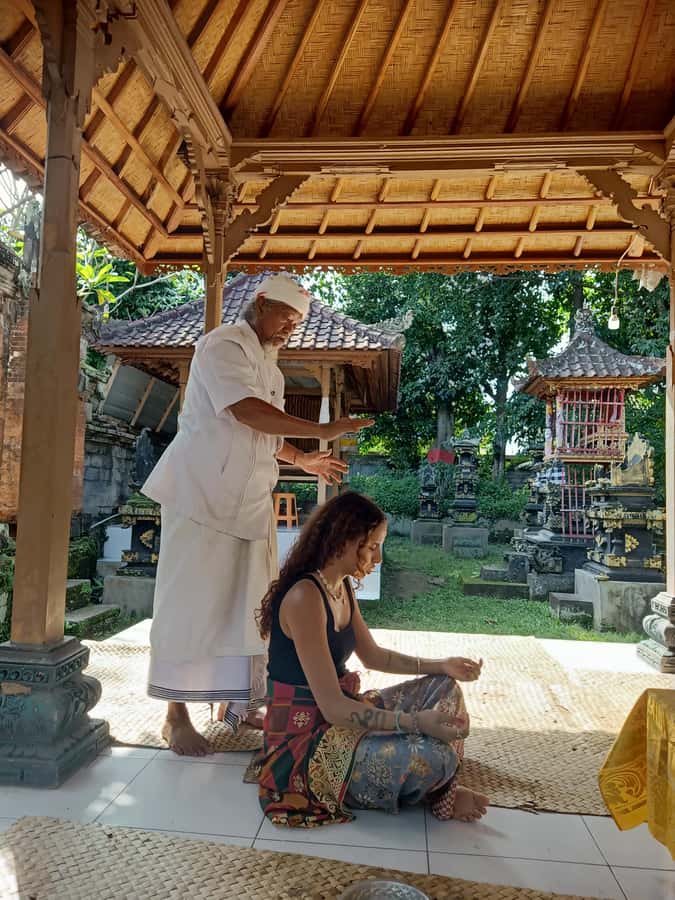
This is the spiritual anchor of the day. At Pura Mengening, you’ll get a guided visit (about 1.5 hours) and then take part in a purification process built around mantra, offerings, and the surrounding sacred water setting.
Here’s what I like about how this is framed for first-timers: you’re not asked to perform “mystical yoga” with zero context. You’ll do the ceremony with your guide and you’ll see the role of Balinese offerings (including canang) as symbols within the ritual.
Also pay attention to the “holy song” part. Mantra in this setting isn’t entertainment—it’s part of the atmosphere and the intention. One thing that shows up again and again in real experiences is that a good guide makes you feel less lost by explaining what to say and how to hold yourself while you participate.
Gianyar Temple Time: Meditating on Fire, Water, and Air
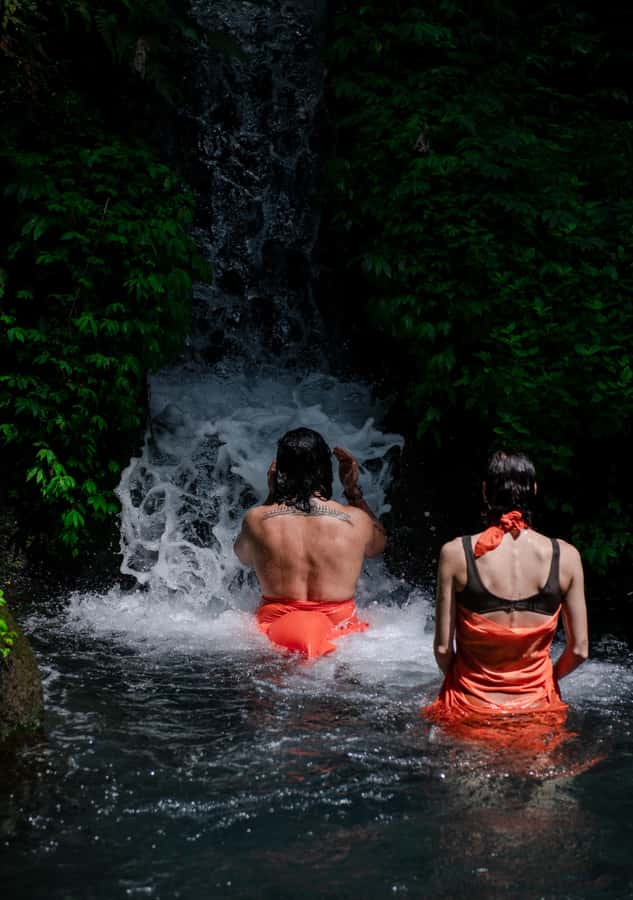
After the Mengening segment, the day moves into Gianyar for about 2 hours of guided time. This is where the ceremony themes get more element-focused, with meditation in front of the temple and a felt connection to fire, water, and air.
That element structure matters because it gives your mind something concrete to attach to. Instead of wandering during meditation, you can mentally track the experience as it shifts—heat and intensity, cooling water energy, and lighter air focus. Even if you don’t “believe” in chakras in a formal way, this approach gives you a framework for noticing sensations and patterns in your own body and attention.
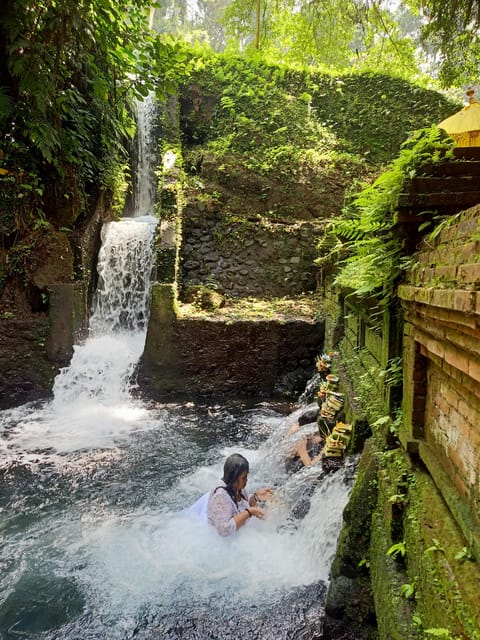
Some experiences also mention additional sacred water moments alongside this portion of the day. If your guide is the type to include a famous water-fountain stop in the Gianyar area, you may see fountain-by-fountain guidance and extra time at ritual water points. (One guide named Gede has been described leading people through water temples with clear instructions on where to hold hands and which fountains to use.)
Meet the Priest: Chakra Healing and the Canang Symbol
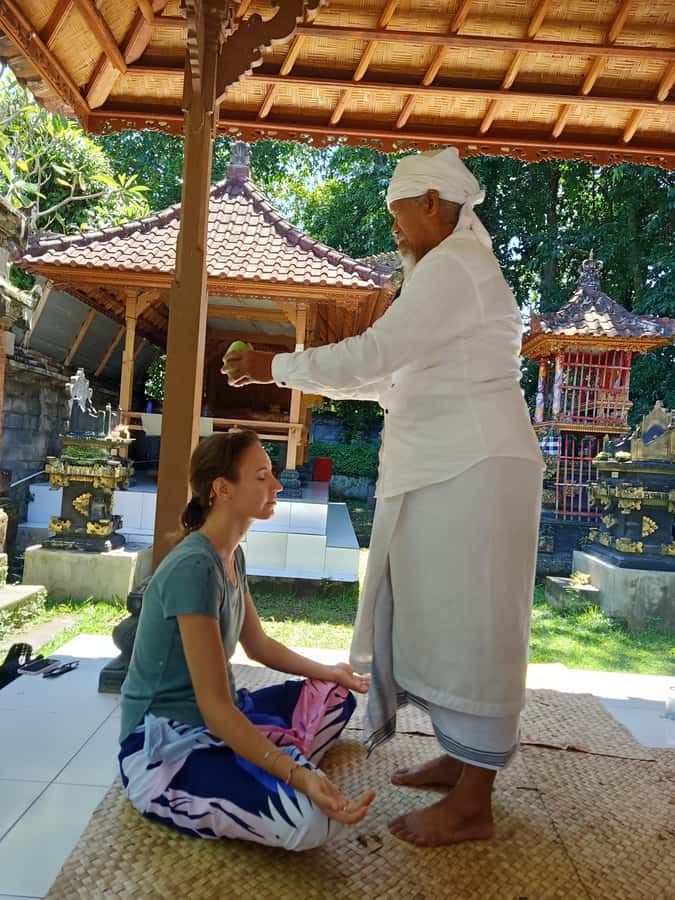
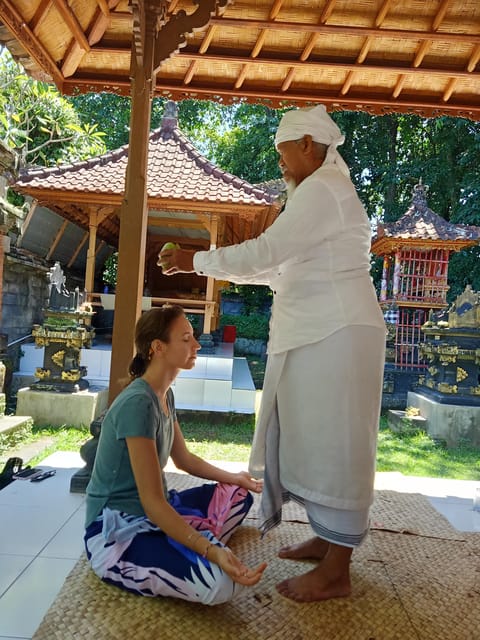
The most distinctive part of this experience is the priest-led chakra healing. You’ll meet a priest and go through a process of opening your chakras, with Balinese offerings used as a symbol of the ritual.
This is the moment where “spiritual” stops being a word and becomes something procedural. Your guide will be there to help you follow along, and the priest’s role is what anchors the ceremony in local practice rather than guesswork. You’re also paying attention to how your energy is guided and rebalanced through the ritual steps.
From the best examples of this day, the guides don’t just translate language. They translate ritual behavior. People report being guided on how to act during the process, including the physical details of what to do and what to say—small things, but they matter. When you don’t have to guess, you can actually be present.
Guide Matters: How Komong, Gede, and Adé Change the Day
This tour is only as good as the people walking you through it, and the guide quality clearly makes a big difference. In multiple experiences, guides named Komong, Gede, and Adé were praised for being friendly, energetic, and very hands-on.
Here’s what stands out in practical terms:
- They explain Balinese culture during transit and at stops, so you understand what you’re looking at.
- They help you follow the ritual without feeling awkward or out of place.
- They guide your participation, not just your sightseeing.
If you’re sensitive to atmospheres—noise, confusion, crowds—this matters even more. A clear guide can turn a temple visit from a “watch and obey” situation into a calmer, more meaningful practice.
What to Wear and Bring: Sarong Provided, Water Included
You’ll get a sarong for temple entry, and the day includes spring-water purification elements. That combination means you should pack for wet feet and changing conditions.
Based on what people recommended for this kind of ritual day, I’d bring:
- Flip-flops for walking near temple water areas
- A swimsuit (you’ll be dealing with water as part of the purification)
- A small towel if you have one (not listed as included, so plan for it)
- Dry clothes for the drive back, because temple-water days can leave you feeling damp
Also remember: bottle water is included, but you’ll still want your own snacks or lunch plan since food isn’t included.
Price and Value: What $70 Buys in an 8-Hour Spiritual Day
At $70 per person for 8 hours, the value is in what’s bundled. You’re not just paying for a driver and a temple ticket. You’re getting:
- A live English tour guide
- AC vehicle and parking fees covered
- Temple sarong included
- Donation for the priest included
- Offerings/canang included
- Bottle water included
The big value piece is the priest part. A guided spiritual ritual with offerings tends to be the part you’d otherwise struggle to arrange. Here, it’s part of the program, not something you hunt for last-minute.
One note for budget planning: because food isn’t included, your “all-in” cost depends on how you handle lunch. Some guides may make a stop that works as a meal break or coffee break, and in at least one described day, there was time for both coffee and a later lunch. Don’t count on that as guaranteed, but do plan around it.
Small Group Energy: Limited to 15 People
This is a small group day, limited to 15 participants. That size matters in a ceremony setting. When the group is smaller, you’re more likely to get individual attention, and your guide can correct behavior quickly (like hand position or how to approach the ritual steps).
It also keeps the vibe calmer. A chakra and mantra day works best when you can hear yourself think and follow instructions without waiting for long turns.
Possible Extras: Waterfall Ceremonies and Coffee-Farm Stops
A couple of real examples include add-on moments that go beyond the main purification and chakra work. One person described a waterfall ceremony that felt invigorating, followed by a stop at a coffee farm afterward.
If your guide has room in the schedule, this kind of pairing can make the day feel more like a full Balinese outing rather than a straight-line ritual itinerary. Still, treat these as flexible extras. The core of your experience stays centered on Pura Mengening, the element-focused meditation, and the priest chakra healing.
Who Should Book This (and Who Might Pass)
This retreat day fits best if you:
- Want a spiritual experience with clear steps, not vague “feel it” instructions
- Appreciate Balinese temple culture and want it explained by an English guide
- Feel drawn to chakra ideas, mantra, or energy rituals (even as a personal practice rather than a literal belief)
You might think twice if you:
- Want a quiet, non-participatory activity. This is hands-on and ceremonial.
- Don’t like water elements. You can’t treat it like a dry temple tour.
- Need a fully catered meal plan. Food is not included, so plan your hunger.
Should You Book This Chakra Healing and Mantra Retreat Day?
If you’re looking for a Bali day that blends temple purification, priest-led chakra opening, and a guided cultural lens, this one is a solid choice. The strongest sign is that the program includes the right ingredients: mantra, offerings, spring-water ritual time, meditation tied to elements, and a guide who coaches your participation.
I’d book it if you’re comfortable being involved in ceremony and you’re okay planning for your own lunch. Skip it if you want a passive “see temples” day or if water-and-meditation practices feel like too much.
FAQ
FAQ
Where does this experience take place in Bali?
It takes place in Bali, Indonesia, with stops including Pura Mengening and a guided visit in Gianyar.
How long is the Bali chakra healing and mantra retreat?
The experience runs for 8 hours.
What is the price per person?
The price is $70 per person.
What are the pickup locations?
Pickup options include Sideman, Ubud, and Kuta.
Is there an English-speaking guide?
Yes. The tour guide is English.
How big is the group?
It’s a small group, limited to 15 participants.
What’s included, and is food provided?
Included items are a live tour guide, bottle water, parking fee, AC vehicle, sarong for the temple, donation for the priest, and offerings/canang. Food is not included.
Do I need to pay the priest separately?
No. The donation for the priest is included in the experience.
What should I bring for the purification at the temple?
You’ll have spring-water purification time. One practical suggestion that comes up is bringing flip-flops and a swimsuit, since you may get wet. A sarong is provided.