REVIEW · HONOLULU
Honolulu: SUP (Standup Paddleboard) Yoga Class
Book on GetYourGuide →Operated by Yoga Floats · Bookable on GetYourGuide
A stand-up paddleboard makes yoga feel brand new. You’ll work through familiar moves on the water with an experienced instructor, then end with savasana while the ocean gently rocks you. I love the small group attention and the way the class stays in waist-deep water with an anchor, so it feels approachable. The one possible drawback: you’ll need basic comfort in swimwear and you should skip it if you’re pregnant or bringing kids under 12.
This is the kind of activity that mixes beach time with real instruction. Expect a mix of seated, kneeling, reclining, and then some standing balance poses as you feel steady. If you want a fun way to challenge your balance without being deep in the ocean, this class is a smart pick.
In This Review
- Key Highlights You’ll Actually Feel
- Why SUP Yoga at Magic Island Feels Different
- The 75-Minute Flow: From Seated Calm to Standing Balance
- Meeting and Orientation: Learn Before You Balance
- Wade Out to Waist-Deep Water and Drop the Anchor
- The Start: Seated Meditation on the Board
- Move Through Seated, Kneeling, and Reclining Poses
- Build Up: Standing Poses and Core Stability
- Balance Fun and the Chance You Might Fall
- Close With Savasana, Rocked by the Waves
- What Makes the Instruction Worth Paying For
- Price and Value: Is $53 a Fair Deal?
- Where You’ll Start in Honolulu (and How to Not Stress)
- What to Bring for a Comfortable Session
- Who This SUP Yoga Class Works Best For
- Practical Tips That Improve Your Balance Fast
- Should You Book SUP Yoga With Yoga Floats in Honolulu?
- FAQ
- FAQ
- Where do I meet for the SUP Yoga class?
- How long is the class?
- Is the class in deep water?
- What’s included in the price?
- What should I bring?
- Do I need to be a strong swimmer?
- Is it suitable for beginners and advanced yogis?
Key Highlights You’ll Actually Feel
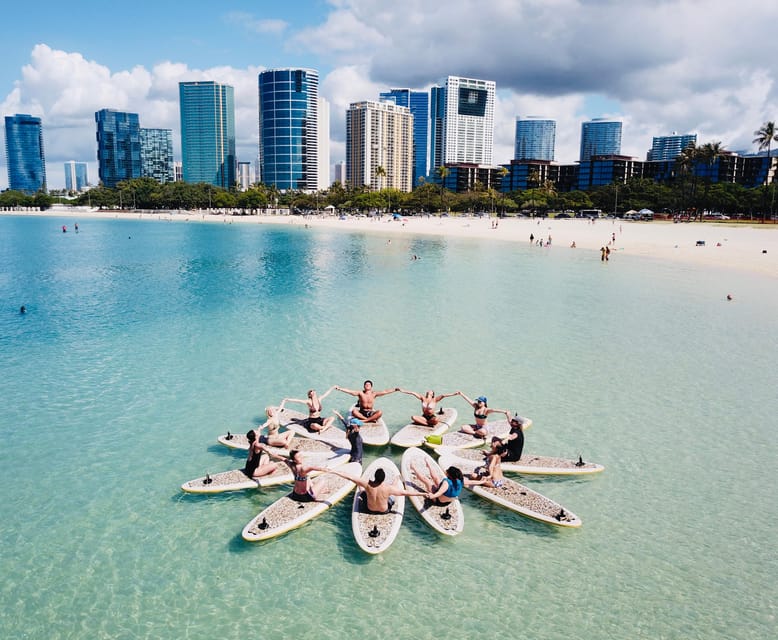
- Coach-led paddleboard yoga basics while you’re still on shore, so you know what to do before you wade out
- Waist-deep, anchored setup designed to keep the class calm and manageable even if you’re not a strong swimmer
- A full progression from seated meditation to standing balance work, with options for all levels
- Wave-supported savasana, where you lie back and let the ocean movement do part of the relaxation
- Small group size (up to 10) that helps the instructor fine-tune your stance and posture
Why SUP Yoga at Magic Island Feels Different
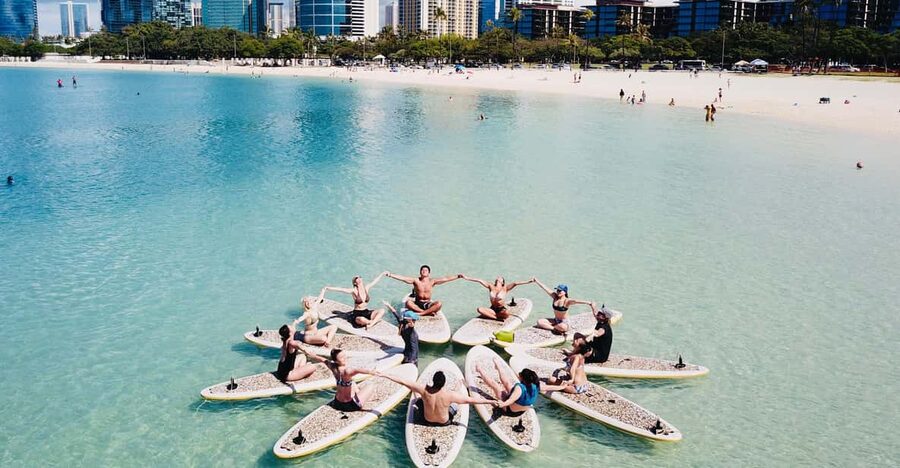
Yoga is usually about stillness. This version adds something honest: water movement. Even when you’re anchored and shallow, the board shifts in a way your body has to negotiate. That’s the point. You get a workout that doesn’t feel like a gym session.
I also like that this isn’t framed as a circus trick. It’s structured. You start with the basics, then you build into balance challenges at a pace set by the instructor and the group. The class is 75 minutes, which is long enough to learn something and still feel like an easy add-on to a beach day.
And there’s a practical beauty to the location. You meet at the south end of the Magic Island parking lot at Ala Moana Beach Park in Honolulu, where the water is right there. After class, you’re not stranded in a far-off area. You can walk back to your plans fast.
You can also read our reviews of more tours and experiences in Honolulu.
The 75-Minute Flow: From Seated Calm to Standing Balance
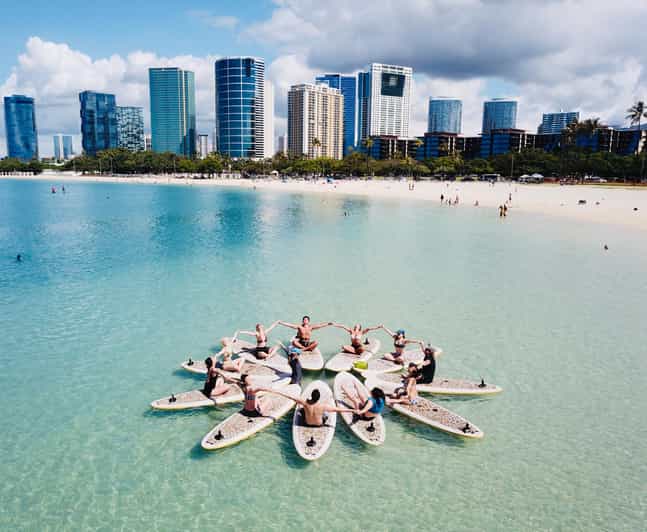
Here’s how the class is designed to unfold, step by step, and why each step matters.
Meeting and Orientation: Learn Before You Balance
You start at Magic Island at the south end of the parking lot. Look for white and gray boards in the grass or the colorful Yoga Floats van. If you get turned around, you can call 808-585-1917 for help, since they don’t receive texts at that number.
Before anyone goes into the water, the instructor talks through paddleboard yoga basics. That’s a big deal. When you show up and the first thing you do is wobble, it can turn into panic. Here, you get a heads-up on how to stay balanced and centered on the board.
This is also where you’ll learn what the instructor wants you to focus on. For example, the class emphasizes control and posture so your core can work even when the board moves.
Wade Out to Waist-Deep Water and Drop the Anchor
Next comes the part that makes this feel beginner-friendly. You wade out with your board to waist-deep water, then drop an anchor so the board doesn’t drift.
That detail changes the whole experience. You’re still on a stand-up paddleboard, so it’s a balance challenge. But you’re not dealing with the unknown of deep water. And the instructions are clear: there’s a safe shallow setup the whole class.
If you’re not a strong swimmer, this is exactly the kind of structure you want. You can focus on yoga cues instead of scanning the ocean for safety.
The Start: Seated Meditation on the Board
The class begins with a seated meditation. It’s a smart way to shift your brain from beach mode into practice mode. You’re already floating, but you’re not yet standing. Your body learns how the board feels under you first.
Move Through Seated, Kneeling, and Reclining Poses
Then you transition into a series of yoga poses adapted for water. The class includes seated, kneeling, and reclining positions. These are the places where you can feel water movement without needing full standing balance right away.
The instructor offers options based on ability level. That means you’re not forced into a single version of a pose just because you showed up. If you’re newer to yoga, you can choose the stable variations. If you’re more experienced, you can push your balance and control where it feels appropriate.
Build Up: Standing Poses and Core Stability
As you gain confidence, you’ll move into standing poses. This is the moment where the challenge becomes physical.
Standing on a paddleboard asks for constant micro-adjustments: ankles, core, hips, and the way you stack your body. It’s not about one perfect moment. It’s about staying centered while the board responds to motion.
The small-group size helps here. With only up to 10 participants, you’re more likely to get personalized attention rather than being one face in a crowd.
Balance Fun and the Chance You Might Fall
There’s also room for fun balance challenges. And yes, falling can happen—one review even points out that people falling kept the mood light and nobody felt singled out.
That’s important. If you’re anxious about looking awkward, this class is structured to keep it chill. The instructor has a patient teaching style, with reviews noting calm guidance and helpful modifications, even for people who hadn’t practiced in a while.
Close With Savasana, Rocked by the Waves
Finally, you end with a blissful savasana. You’ll lie down while the board gently rocks with the ocean waves. Fingers and toes can trail in the water, which turns the final relaxation into something sensory instead of purely mental.
It’s a relaxing way to “land” the whole practice. You’ve worked hard to balance and stabilize, and then you let the ocean do the moving for you.
What Makes the Instruction Worth Paying For
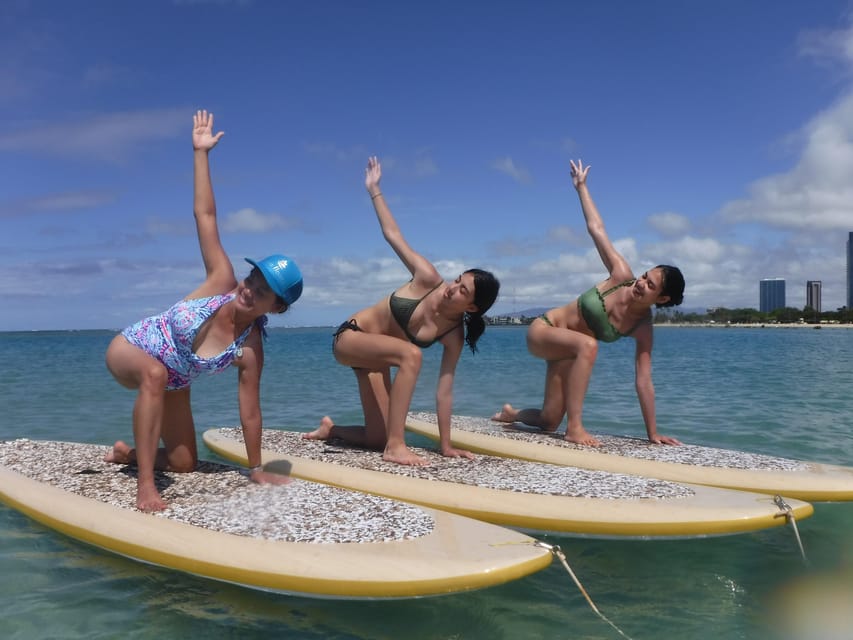
At $53 per person for 75 minutes, you’re not just buying a spot. You’re paying for three things that matter on water: a pro guide, all necessary equipment, and a class flow that keeps you safe while still challenging.
The equipment is included. That means you’re not hunting down a rental or guessing if you picked the right board size. You also get safe place to store belongings. It sounds simple, but it reduces mental load. You can show up, gear up, and focus on the session.
The instructor’s role is the real multiplier. A review highlights an instructor named Allie as friendly and informative. Another review praises the patience and says the instructor has been doing this for a long time. That shows up in the way the class works: you get options, not commands.
And because it’s limited to 10 participants, it’s easier for the guide to notice what you’re doing. You’re more likely to get quick corrections on balance and posture.
Price and Value: Is $53 a Fair Deal?
For Honolulu, $53 for 75 minutes may sound like a lot if you’re thinking about a basic yoga studio class. But here’s the value math that matters:
- You’re getting professional guidance on water, not just an on-land class.
- Equipment is included, which is often the hidden cost of SUP activities.
- The setup includes a safe shallow anchored area, which keeps the experience focused and reduces risk.
- You’re getting a structured progression, not a random “try it yourself” session.
In other words, the price feels fair because the cost supports the whole experience: board + instructor + safe teaching environment. If you want one hour of pure variety—yoga plus ocean balance—this is a practical way to try it without needing experience first.
Where You’ll Start in Honolulu (and How to Not Stress)
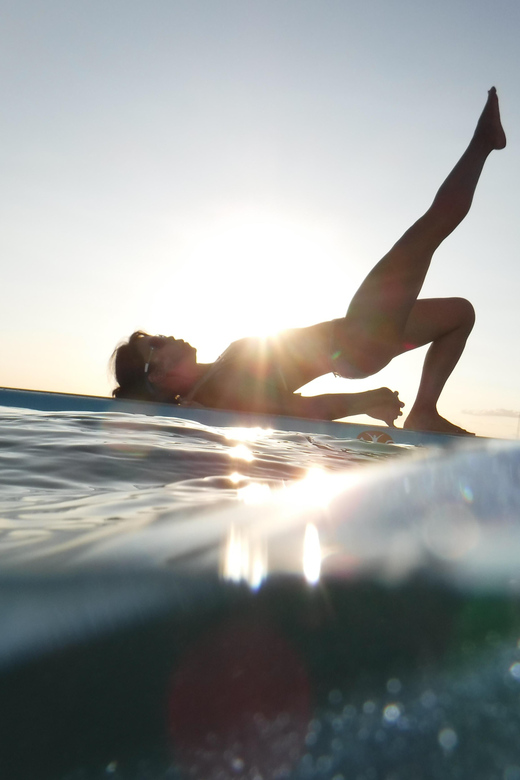
The meeting point is the south end of the Magic Island parking lot at Ala Moana Beach Park.
You’ll know where to go because the team is using boards in the grass (white and gray) and/or a colorful Yoga Floats van. If you’re arriving with limited time, that clarity helps.
Transportation isn’t included, so plan to get yourself there. Also, the class is taught in English.
One more practical note: call if you have questions. They don’t receive text messages at the number provided. If you’re the type who likes quick check-ins, calling might save you time.
What to Bring for a Comfortable Session
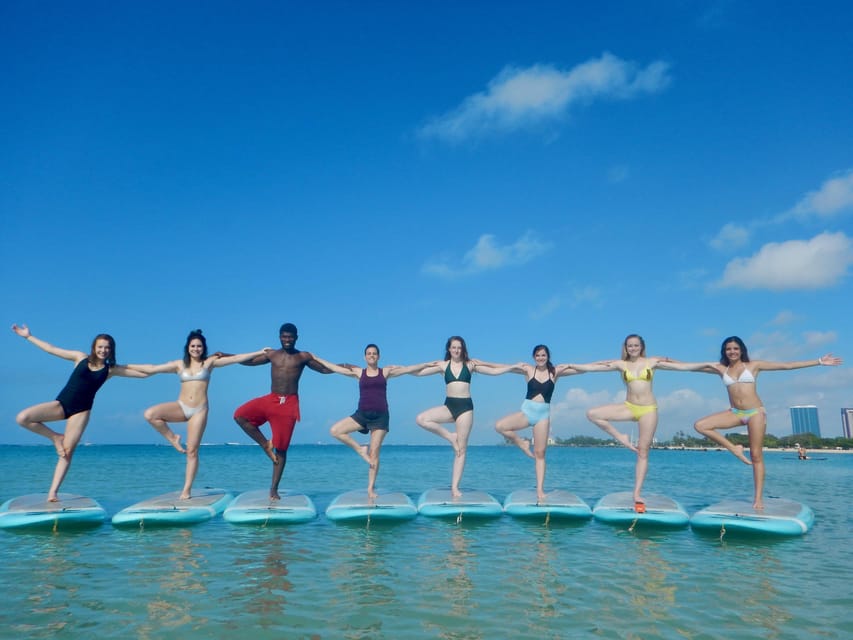
Pack like you’re going to be in the water for part of your class. The essentials are straightforward:
- Swimwear
- Towel
- Sunscreen
- Water
Staying hydrated matters, even if the session isn’t described as intense like a cardio workout. Also, you’ll feel the sun more than you expect when you’re on a board and moving slowly.
If you’re the kind of person who gets chilly easily, you might bring layers for after, since the class ends back at the beach.
Who This SUP Yoga Class Works Best For
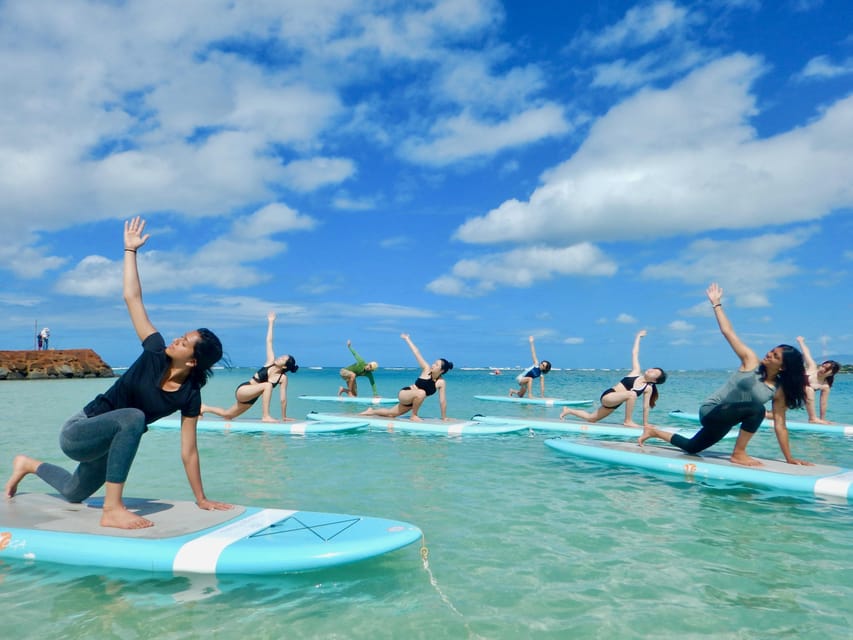
This class says it’s suitable for all skill levels. That makes sense given the progression and the options offered by the instructor.
I’d especially recommend it if:
- You want a fun challenge but prefer structured safety (anchored, waist-deep water)
- You’re a yoga beginner or returning after a break and want cues without pressure
- You’re an experienced yogi who wants balance work in a new environment
- You love the idea of ending with ocean-rocked relaxation rather than a dry savasana
And I’d skip it if:
- You’re pregnant (not suitable)
- You’re bringing children under 12 (not suitable)
Practical Tips That Improve Your Balance Fast
I’m not going to pretend SUP yoga is only about “trying harder.” It’s about staying centered and letting the instructor’s options guide your practice.
Here are the habits that make it easier:
- Treat standing poses like a series of small adjustments, not one static pose
- Use the seated and reclining parts of the flow to learn how your board responds
- Pick the option that lets you breathe steadily; you can always work more challenging variations later
- If you fall, keep it light. The class is set up for good humor, and you won’t be “in trouble” for it
If you go in expecting it to feel different, you’ll have more fun and you’ll likely improve faster.
Should You Book SUP Yoga With Yoga Floats in Honolulu?
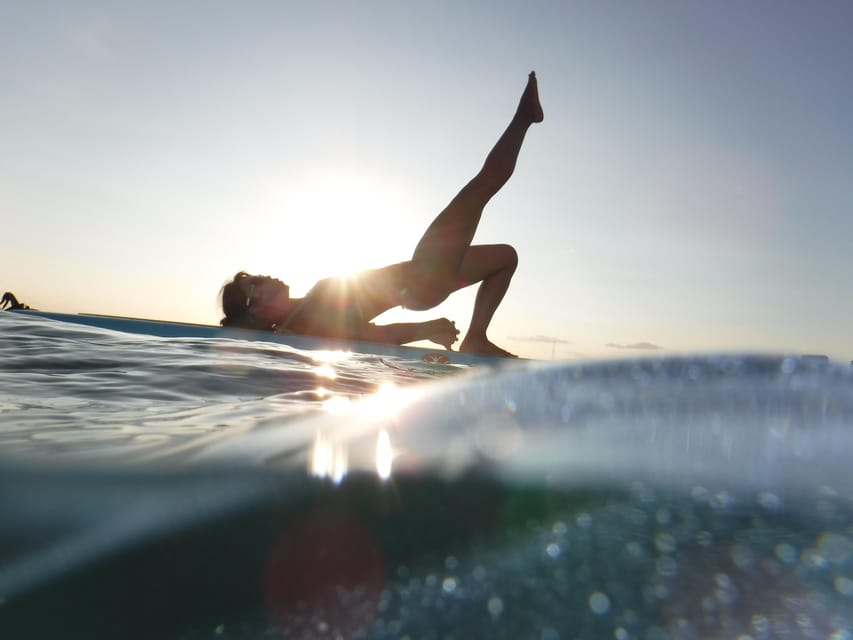
Yes—if you want a high-value mix of yoga, balance training, and Hawaii scenery without needing ocean-swimming experience. The anchored, waist-deep setup is the big reason this feels approachable. The small group size adds real coaching.
I’d skip it only if you don’t fit the limits (pregnant or under 12) or if you hate being in swimwear around water. Otherwise, this is one of those activities that turns an hour into a story you’ll actually talk about later.
FAQ
FAQ
Where do I meet for the SUP Yoga class?
Meet at the south end of the Magic Island parking lot in Honolulu at Ala Moana Beach Park.
How long is the class?
The class lasts 75 minutes.
Is the class in deep water?
No. You wade out to waist-deep water and the board is anchored, so the class stays shallow the whole time.
What’s included in the price?
The price includes a professional guide, all necessary equipment, and a safe place to store belongings.
What should I bring?
Bring swimwear, a towel, sunscreen, and water.
Do I need to be a strong swimmer?
The setup is designed to stay shallow, and you can focus on yoga rather than swimming. If you’re not a strong swimmer, you’ll still be in waist-deep water the whole class.
Is it suitable for beginners and advanced yogis?
Yes. The class is suitable for all skill levels, and the instructor provides options. It includes seated, kneeling, reclining poses and some standing balance work as you gain confidence.