REVIEW · HANOI
Ha Noi – Full-day mindfulness meditation retreat
Book on GetYourGuide →Operated by JANGTOURS · Bookable on GetYourGuide
Calm starts with rules and respect. This Hanoi retreat is built like a guided practice day, mixing Buddhist philosophy with hands-on meditation coaching. I especially like how it teaches the correct method of meditation from the beginning, and how you can ask questions directly during the spiritual guidance parts. Guides such as Hieu, Hung, and Hieng are known for making the day feel personal, not like a lecture you can’t grab onto.
One thing to consider: it’s a long, structured day far from central Hanoi. You’ll want to plan for the full 8 hours, follow the dress code (bring long pants; no shorts), and accept that this is a practice-focused schedule, not sightseeing time.
In This Review
- Key highlights worth your time
- A pagoda retreat in Dong Bac: why this day feels different
- 8:00 to 12:00: etiquette, sutras, and the foundations of meditation
- Mindful movement from 9:15 onward: walking, breathing, and qigong
- Karma, Arhats, and releasing beings: compassion rituals explained
- 14:00 doctrine session and your gratitude meal
- Price and logistics for the $90 retreat day
- Should you book this mindfulness retreat?
- FAQ
- How long is the Ha Noi mindfulness meditation retreat?
- What language is the instruction?
- What’s included in the price?
- Is transportation included from downtown?
- What should I bring and wear?
- Are there any items that aren’t allowed?
- Is it a large group?
Key highlights worth your time
- Learning meditation method step-by-step so you know what to do, not just what to think
- Pagoda etiquette from the start (how to greet monks and nuns, and how to behave in a temple space)
- Mindful movement: walking meditation plus mindful breathing paired with qigong movements
- Compassion rituals in practice, including releasing beings as a way to cultivate loving-kindness
- Monk guidance and doctrine study, so your questions get answered in context
- Grateful meals that turn eating into part of the training, with vegetarian food included
A pagoda retreat in Dong Bac: why this day feels different
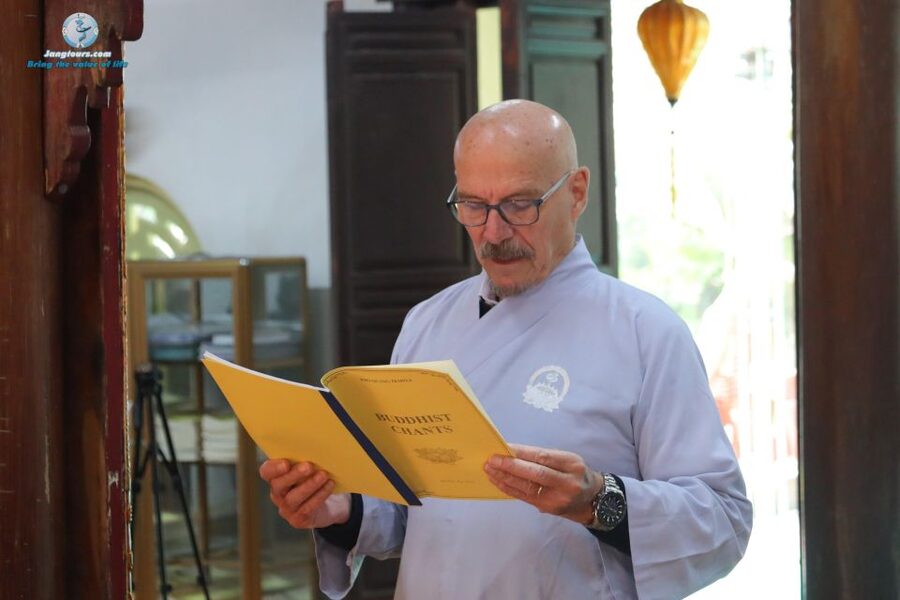
This isn’t a “sit and hope” retreat. It’s a full-day format that keeps changing gears—etiquette, rituals, breathing, walking, chanting, doctrine—so your mind has somewhere to land. The location is in Dong Bac, Hanoi, and the pagoda where you start is in an alley in Thanh Xuan District. Plan to keep things simple and follow the schedule closely; the day is designed to build momentum.
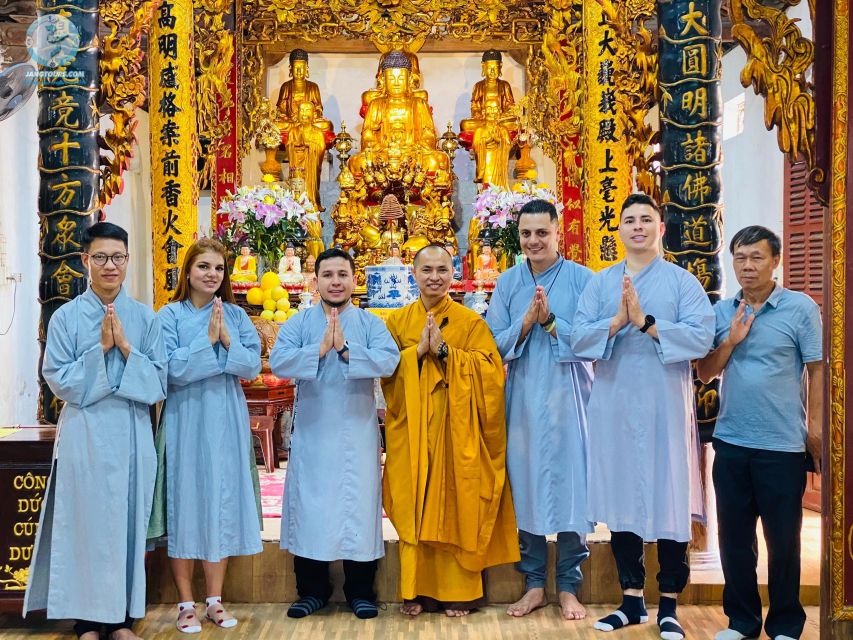
You’ll get an English-speaking local guide on the spot, and it’s set up as a small group. The listing notes it can be limited to 1 participant, which usually means you should expect more attention and fewer awkward moments asking basic questions.
The vibe is quietly serious, but it’s also human. Even the way the day is framed—peace, happiness, compassion—sounds like something you can practice in real life, not just memorize. If you’ve ever felt stuck in meditation because you don’t know whether you’re doing it “right,” this kind of structure is exactly what you’re looking for.
One more practical note: you’re supplied with vegetarian meals and water/soft drinks, so you’re not hunting food around Hanoi between sessions.
You can also read our reviews of more tours and experiences in Hanoi.

8:00 to 12:00: etiquette, sutras, and the foundations of meditation
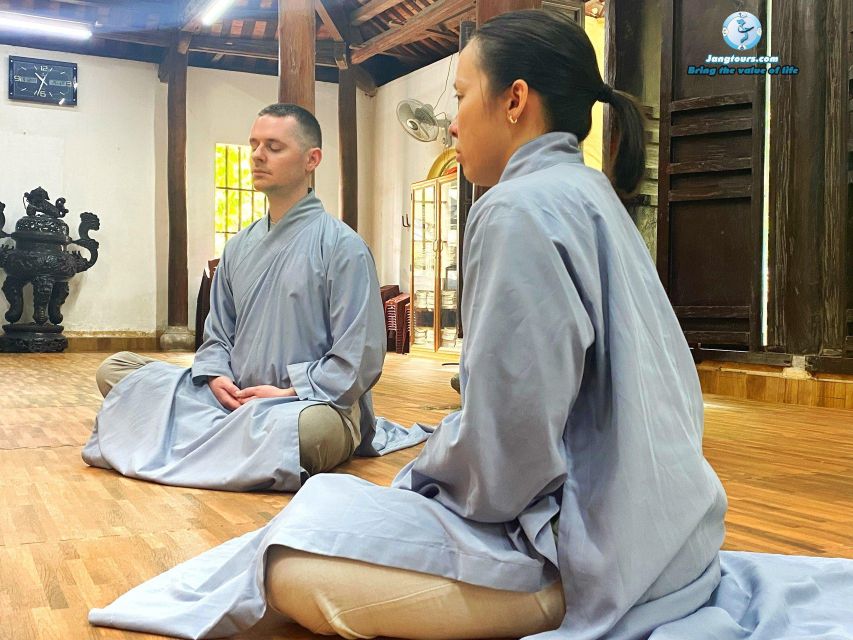
The day opens with greetings and a first lesson. From about 08:00 to 08:45, you learn temple regulations and how to greet monks and nuns when you meet them. This matters more than it sounds. Temple etiquette isn’t about being stiff; it’s about slowing down and signaling respect so the space can do its job.
From there, the program shifts into Buddhist rituals and sutras (roughly 08:45 to 09:10). Sutras are presented as the Buddha’s teachings, and the focus is on bringing those teachings into daily life. You’re not just hearing doctrine; you’re being guided to connect it to practice.
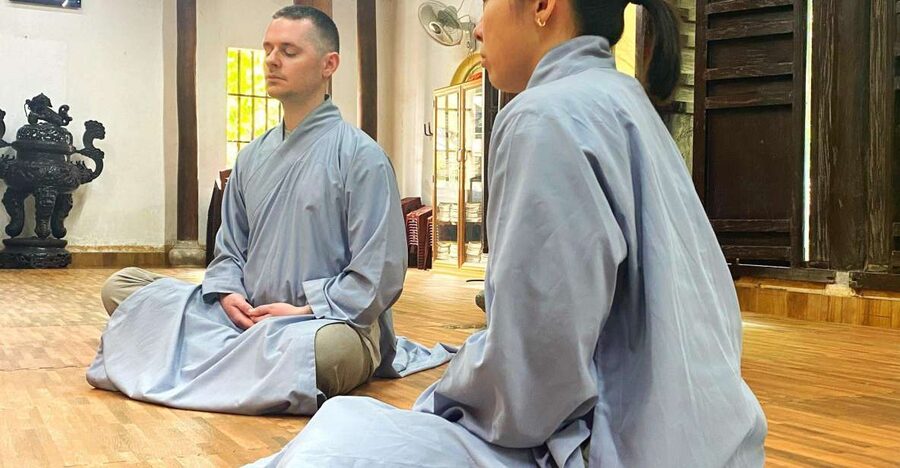
Next, the schedule gives you an early taste of mindfulness through walking meditation (about 09:15 to 09:30). This is useful if you find sitting meditation hard. You learn how to stay fully present—breath and step—so “mindfulness” becomes something physical, not abstract.
Then you move into the meditation training that supports the mind and body. By late morning, you’ll also hear how meditation is framed as peace and purification: it’s not only about calm feelings, it’s described as moving beyond thought patterns and attachments that keep you stuck.
One small drawback of this structured start: if you’re expecting a relaxed, casual hangout in a temple, the day will feel more like training camp. The good news is that you’ll always know what comes next.
Mindful movement from 9:15 onward: walking, breathing, and qigong
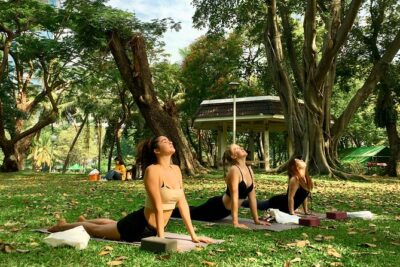
After walking meditation, the program uses mindful breathing paired with inner energy movements described as qigong (around 09:35 to 09:45). The point is simple: strengthen the body and mind so meditation becomes easier to hold. This is a smart sequence for beginners, because breathing and gentle movement often help you settle when your mind won’t.
Around 09:50 to 10:10, the day links meditation to “touching peace” and then to soul purification. You’ll hear the idea that the peace of your mind can be greater than the pleasures of the outside world. Whether you interpret that literally or practically, it’s a helpful reframe: your attention trains you to value what lasts.
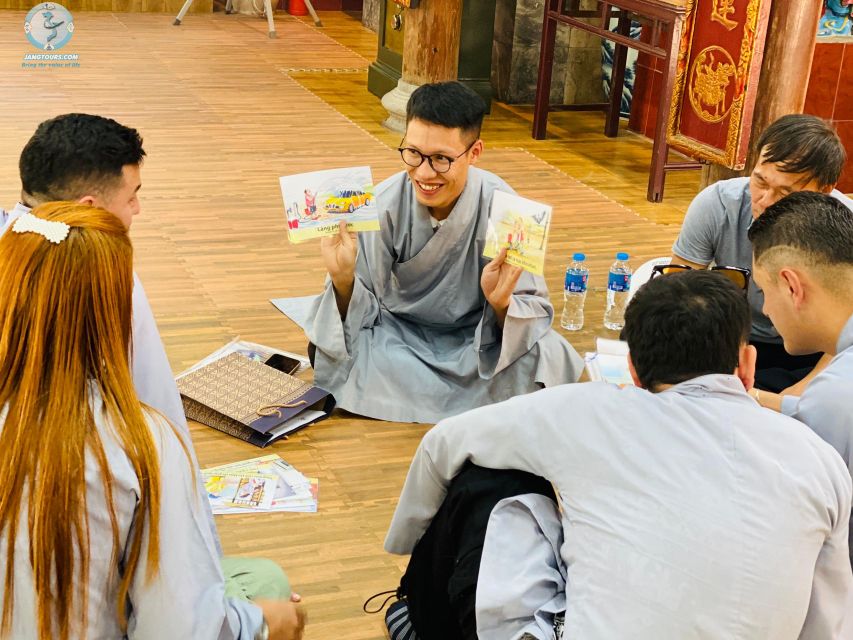
Then comes mindful talking (about 10:15 to 10:30). You’ll talk about karma law through photos. This part is easy to underestimate. Karma can sound like a heavy concept until it’s shown as something you recognize in everyday cause and effect. The photos help make it less philosophical and more visible.
From a value perspective, I like that the retreat doesn’t treat your day as divided into “learning time” and “practice time.” It keeps folding meaning back into the exercises. You’re building a way of paying attention that you can carry out of the pagoda.
Karma, Arhats, and releasing beings: compassion rituals explained
Late morning turns toward rituals and compassion, and this is where the retreat leans into its spiritual teaching style.
At about 10:35 to 10:45, you’ll cover the ritual of asking for the Arhat (described as the “secret favor” in the schedule). You’re also taught that worshiping Arhats is presented as a proper way to receive blessings and plant seeds for enlightenment in a future life. Even if you don’t come from a Buddhist background, you’ll at least understand the logic and purpose behind the ritual so you’re not just copying motions.
Then at 10:50 to 11:00, you practice compassionate practicing through releasing beings. The idea given is that releasing beings is part of compassion and good deeds, linked to a long life. It’s also one of the retreat’s most distinctive highlights: you’re not only learning compassion, you’re doing something symbolic to nurture it.
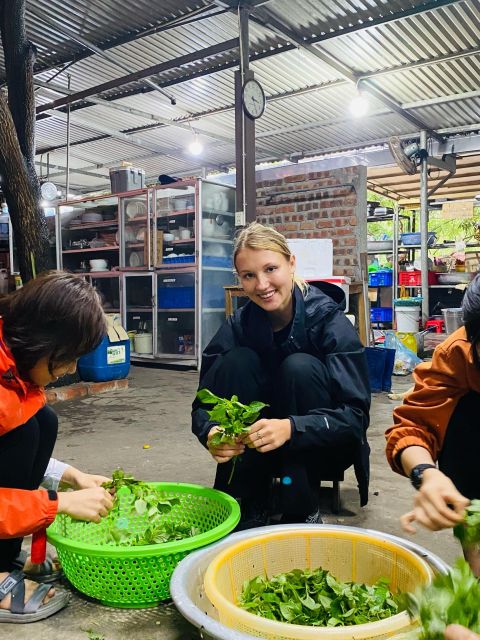
Around 11:00 to 12:00, the day includes a grateful meal. You’ll be guided to express gratitude before and after eating, cultivating appreciation and mindfulness for food and encouraging you not to waste it. This turns “food time” into a mini practice, which I find helps the whole day feel connected, instead of scattered.
One more thing I appreciate: the retreat includes time to consult with a monk for guidance on questions related to spiritual practice. In practice sessions, people often hold back because they don’t want to interrupt. Here, your questions are part of the design, especially once you head into doctrine learning later in the afternoon.
14:00 doctrine session and your gratitude meal
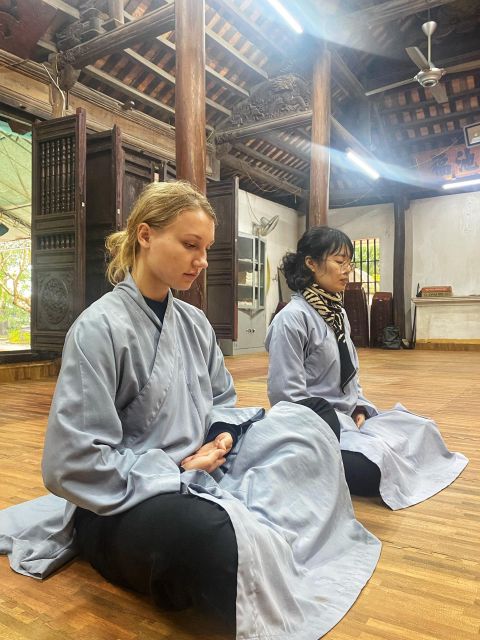
After the morning closes and your meal training finishes, the retreat restarts in the afternoon at 14:00 with another meditation session. There’s a gap in the schedule after lunch where you can expect some break time, though the exact minutes aren’t laid out. The structure still makes sense: you’ll have digested concepts in the morning, then return when your attention can regroup.
At 15:00 to 16:45, the focus becomes heavier: learning Buddhist doctrines. This is where the retreat aims to connect your experience to deeper teachings, rather than leaving you with only techniques. And because the retreat specifically includes guidance through a monk, this is often the best time to ask practical questions like what to focus on and how to interpret what you experience during meditation.
Finally, the day closes around 17:00.
You’ll want to know meals are included beyond lunch. The package lists vegetarian lunch and dinner, plus soft drinks and mineral water. Since the end time is early evening, the dinner inclusion fits the full-day rhythm and keeps you from scrambling for food after a long practice day.

Price and logistics for the $90 retreat day
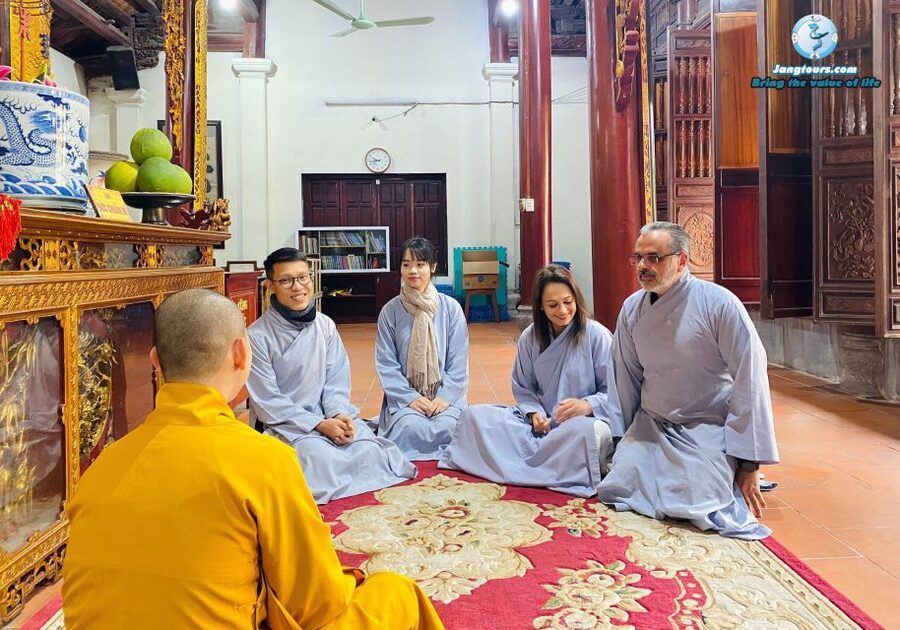
The price is $90 per person for about 8 hours of guided practice, with entrance fees and spiritual rituals included. For Hanoi, that’s not the cheapest meditation experience—but it’s also not a random drop-in class. You’re paying for structure, English instruction, temple access, and guided sessions that cover etiquette, meditation, rituals, and doctrine learning.
The biggest logistics detail is transportation. The pagoda is about 10 kilometers from downtown, and transportation is not included. The easiest plan is to take a Grab bike or taxi directly to the meeting point in Thanh Xuan District. Because the start time matters for etiquette and the first lessons, I’d avoid arriving late even if you’re feeling calm.
Dress code is important too. Bring long pants. Shorts and short skirts aren’t allowed, and the retreat also bans alcohol and drugs. If you travel light and hate carrying another layer, plan to swap outfits before you go.
Also, the retreat is listed as English-instructed and small-group focused, so if you want personal attention, this is a good fit compared with big group tourist-friendly temple tours.
Should you book this mindfulness retreat?
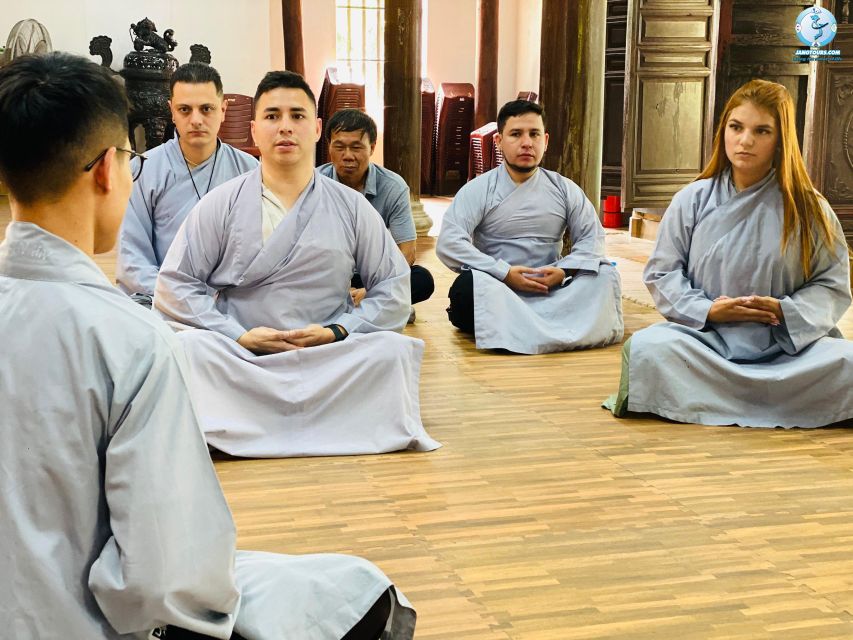
Book this if you want a real practice day—one that teaches how to meditate, explains Buddhist ideas clearly, and gives you structured time for both movement and stillness. I’d also recommend it if you’re the type who asks questions (and wants answers that connect to the practice), because the monk guidance and doctrine time are a real part of the value.
Skip it if you’re hoping for a casual temple visit, lots of free time, or flexible pacing. This is a schedule-forward retreat with etiquette rules and a strong practice focus. Also, if long pants are a hassle, or you dislike rituals, you might find it more intense than you expected.
If you match the mood—curious, respectful, and ready to follow a step-by-step day—this retreat is likely to leave you feeling calmer and clearer, not just informed.
FAQ
How long is the Ha Noi mindfulness meditation retreat?
It lasts about 8 hours.
What language is the instruction?
The instructor is listed as English.
What’s included in the price?
Entrance fees, spiritual rituals, vegetarian lunch and dinner with soft drinks, mineral water, and a local guide on the spot.
Is transportation included from downtown?
No. The pagoda is about 10 kilometers from downtown, and you’ll need to arrange your own transport (Grab bike or taxi are suggested).
What should I bring and wear?
Bring long pants. Shorts and short skirts are not allowed.
Are there any items that aren’t allowed?
Alcohol and drugs are not allowed.
Is it a large group?
It’s a small group, listed as limited (including the option of 1 participant).