REVIEW · FUJINOMIYA
Samurai Swordsmanship and Sound Meditation in nature
Book on GetYourGuide →Operated by Wago · Bookable on GetYourGuide
A sword lesson that also calms your mind. This experience mixes samurai swordsmanship with sound meditation in nature, then ends with a samurai art dance that feels personal, not touristy.
I like how it gives you hands-on time with an unsharpened sword, then lets you experience real cutting. I also love the river-side setup, where traditional flutes and drums become part of the lesson, not background noise. A possible drawback: sword practice takes real physical effort, so it may not be ideal if you have back problems.
You’ll meet your instructor at Uenohara Station and head to a private river venue surrounded by trees and rocks. The host, Yusuke (English and Japanese), is a sword performer and tournament champion, and his wife Yoshino contributes to the music and tea during the session. With a small group capped at 10, you get more coaching than you’ll find in big show-style experiences.
In This Review
- Key moments that make this samurai experience different
- Uenohara Station to samurai-ready: kimono, hakama, and first respect
- River purification and the eight million gods prayer
- Sound meditation in nature: flutes, drums, and standing still
- Samurai swordsmanship basics: safe practice, then real cutting
- Watching the sacred sword dance and getting your photos right
- Price and value: what $64 for 210 minutes really covers
- Who should book this samurai sword and sound meditation experience
- Should you book it?
- FAQ
- Where is the meeting point?
- How long is the experience?
- What’s included in the price?
- What do I need to bring?
- What languages are available?
- Is transportation included?
- Are there any restrictions on what I can bring or do?
- What if the weather is bad?
- Is it suitable for everyone?
- Can I get a refund if I need to cancel?
Key moments that make this samurai experience different
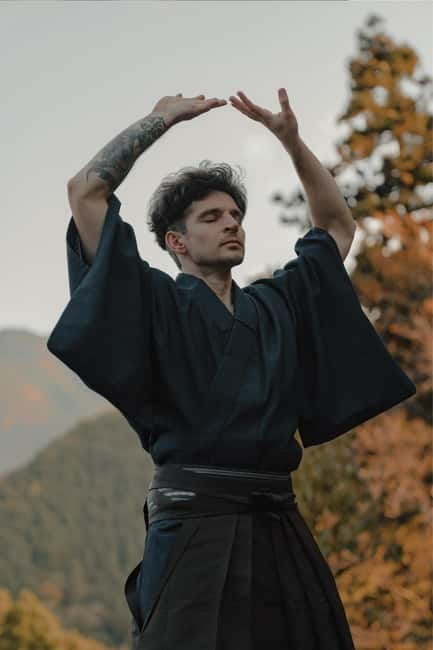
- Yusuke’s sword credentials: All Japan Swordsmanship Tournament winner, plus film/TV appearances including an official Olympic channel role
- River purification ritual with prayer to the eight million gods, guided in a quiet, natural setting
- Sound meditation on the water using traditional instruments like flutes and drums (plus other sound tools during the session)
- Practice with safety first: unsharpened sword movements, then a real sword cutting experience
- Full samurai clothing time: kimono and hakama, plus a sacred dance and photo moment
- Small group pace: limited to 10 participants for hands-on attention
Uenohara Station to samurai-ready: kimono, hakama, and first respect
This is one of those experiences where the day’s mood changes before you even touch a sword. You start at Uenohara Station, specifically the rotary on the first floor of the south exit, with the hosts meeting you in a white car. Then you transfer to the private venue.
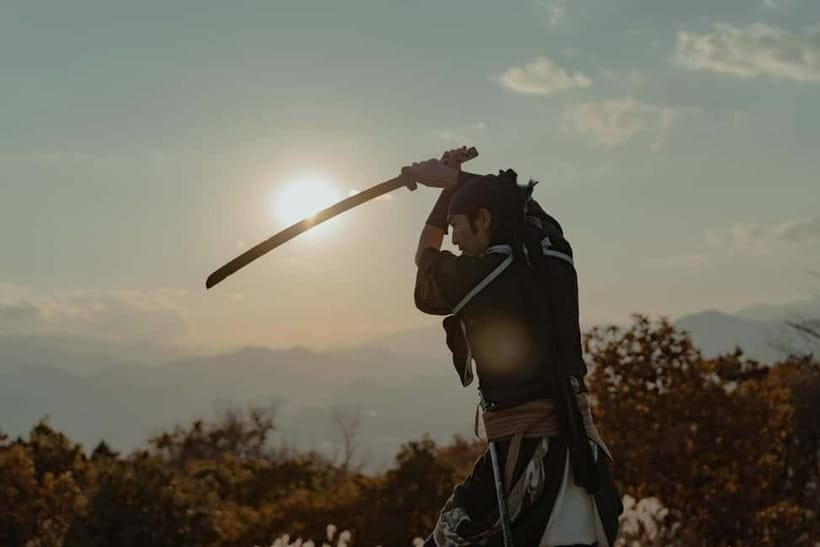
Once you arrive, the first big shift is clothing. You change into a kimono and hakama, which matters more than you might expect. It changes your posture and your awareness of movement, and it also signals respect for the tradition you’re about to practice. You’ll also be reminded to wear comfortable clothes underneath, since you’ll need to move and stand for parts of the session.
The session is paced for a small group (10 maximum), so you’re not watching from the back row. The instructor teaches basic movements and how to handle the sword with control. That hands-on approach is a big part of why people call this a highlight of their Japan trip.
Practical note: comfortable shoes aren’t listed, but you should assume you’ll be standing and walking around a natural space. Bring a camera, and bring water. If the weather turns, parts of the experience may shift indoors, so flexible clothing and a ready-to-wear layer plan helps.
River purification and the eight million gods prayer
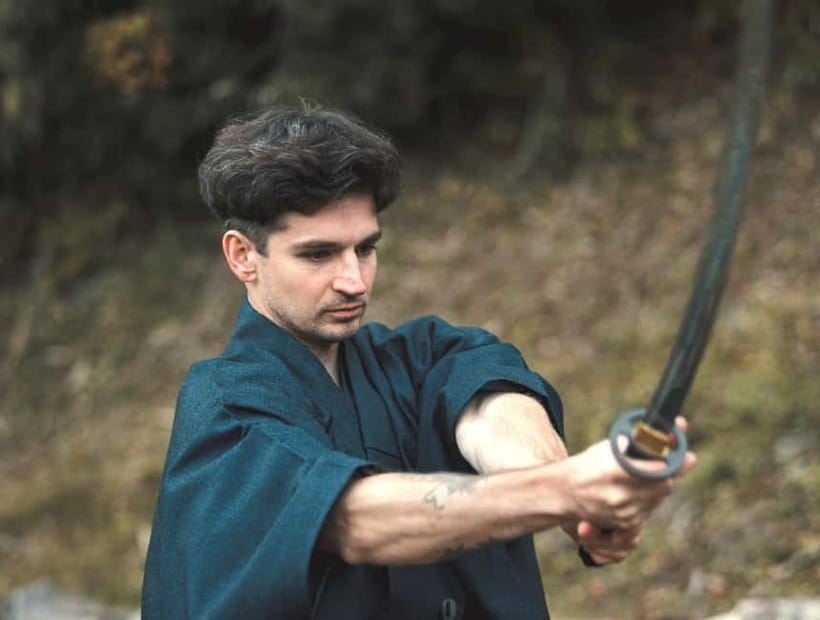
The most calming part starts before any sword work. You’ll purify your mind and body with water from a beautiful private river. The setting is private and nature-focused, with a feeling of quiet space around you—trees, water sounds, and a venue designed for stillness.
Then comes a ritual element: purification with a sword and reciting a prayer to the eight million gods. Even if you don’t understand every word, the structure is clear—this isn’t just a performance, it’s a moment of intention. You’re taught to treat the sword as something meaningful, not just a prop.
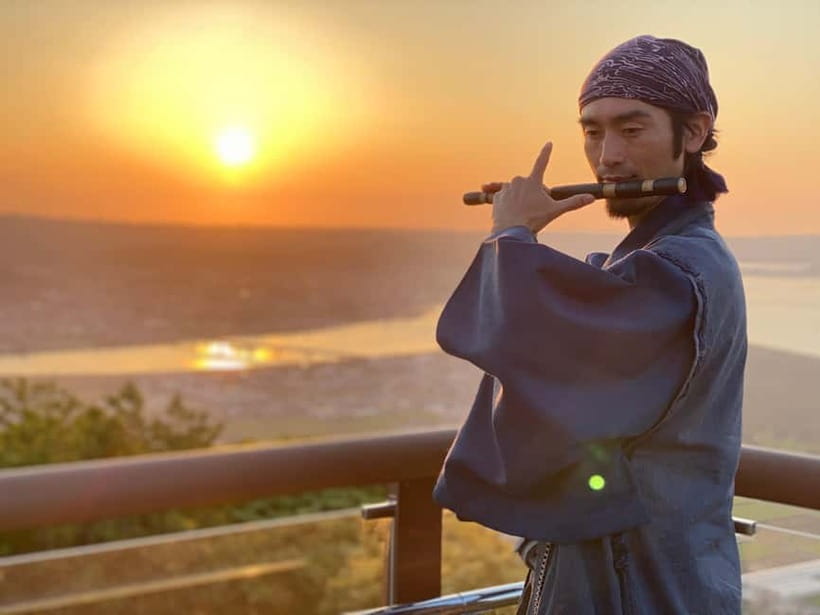
Sound becomes the next layer. Alongside the water sounds, you’ll hear traditional instrument music used for purification and healing. One name you’ll hear in the session’s descriptions is the dragon flute style, paired with a sound setup that feels crafted for listening—flute tones, drums, and other traditional sounds.
Why this matters: sound meditation works best when your body stops fighting the day. River water does that for you. It lowers your mental volume, so later when you practice movements, you can actually feel what your arms, shoulders, and stance are doing.
Sound meditation in nature: flutes, drums, and standing still
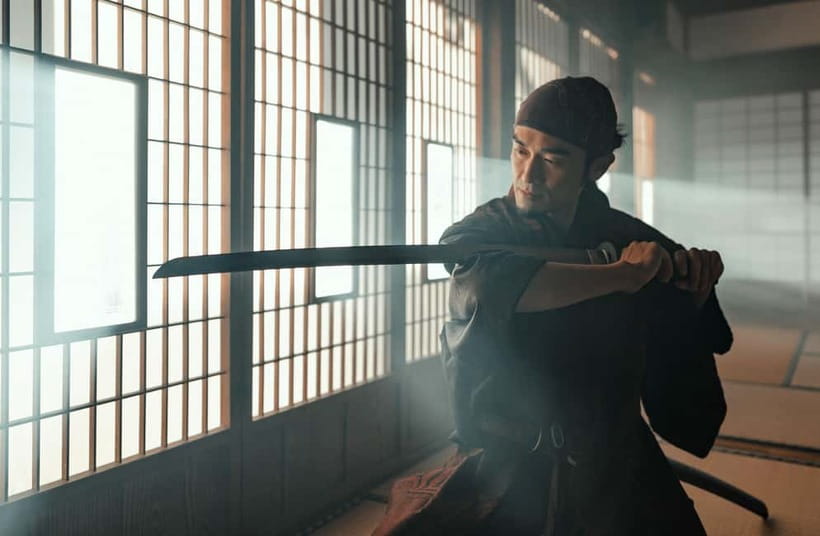
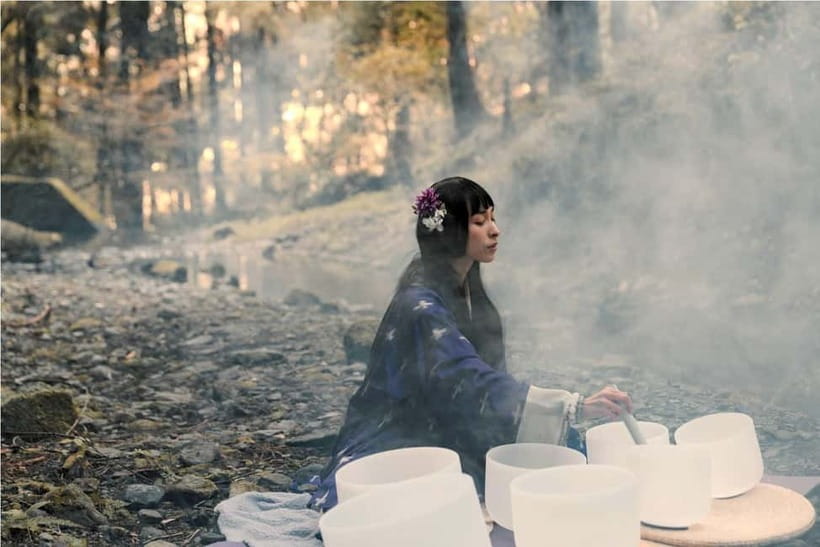
After purification, the session shifts into sound meditation. This is not a quick “close your eyes for one minute” moment. You’ll listen to traditional instruments—flutes and drums are specifically mentioned—while you tune your attention. The music is part of the guided practice, and it’s not locked to a script either. The host is known for improvising music and meditations during the experience, so your timing and mood can shape what you hear.
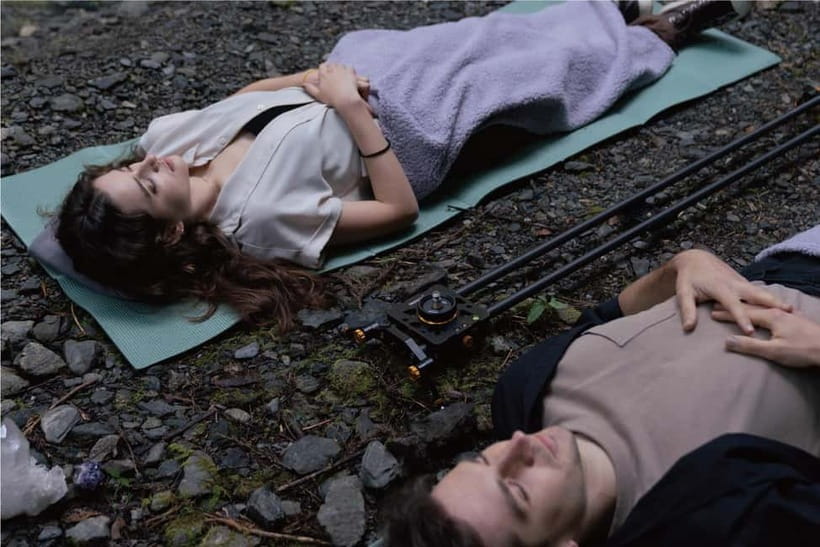
Standing meditation is included too. You’ll spend time standing Zen-style while you feel the nature around you—water nearby, air moving through trees, and a steady sense of quiet. That combination helps in a very practical way: it makes the later sword practice feel connected to your breathing instead of separate from it.
Some participants also mention sound healing elements like singing bowl sounds, plus instruments such as koshi and vocals during the session. Even if you’ve never heard those instruments live, the goal is the same: slow your system down and let vibration do some of the work.
What to expect in your body:
- Your legs will likely feel the work from standing Zen.
- Your mind will keep trying to plan or multitask. That’s normal; the session gives you a structure to return to listening.
- You may feel noticeably calmer by the time you reach the sword segment.
One weather consideration: the experience may be held indoors depending on conditions. If that happens, the calm still usually comes from the sound-focused format, but the open-nature feeling could be reduced.
Samurai swordsmanship basics: safe practice, then real cutting
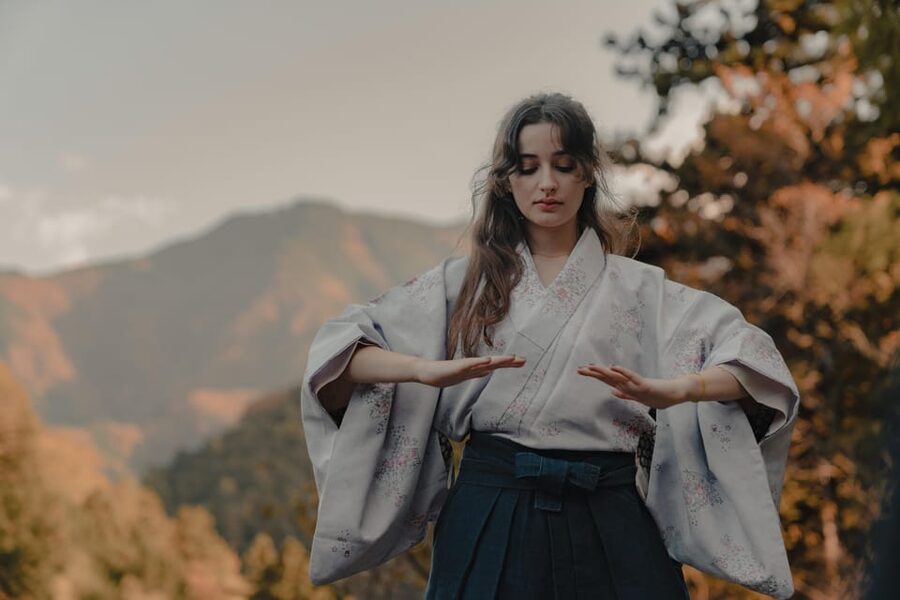
Now for the part most people booked for: samurai swordsmanship. You’ll learn how to handle a Japanese sword and practice basic movements. Importantly, sword practice is done with an unsharpened sword. That’s a huge value point because it lets you focus on form—grip, angle, footwork, and timing—without the anxiety of danger.
Then you get the real cutting experience. The session includes real sword cutting, which is why this isn’t just a demo. You get to experience the result of what you learned. It’s the kind of moment that makes the whole day click, because you feel the transformation from movement to impact.
The instructor teaches you how to respect the sword, and you’re coached on initial basic moves. Since you’ll be learning with a live teacher (and in a small group), you’ll get correction and guidance rather than only instructions from a video.
The catch is physical fitness. The activity notes that sword practice requires physical fitness. You’ll be standing, moving your arms, and repeating controlled actions. If you have back issues, the tour specifically says it’s not suitable. If you’re generally active, you’ll likely be fine, but it’s not a sit-and-watch class.
Also, no alcohol is allowed, and smoking and drugs are forbidden. That’s not just rules on paper; it helps keep the whole ritual and safety culture intact.
Watching the sacred sword dance and getting your photos right
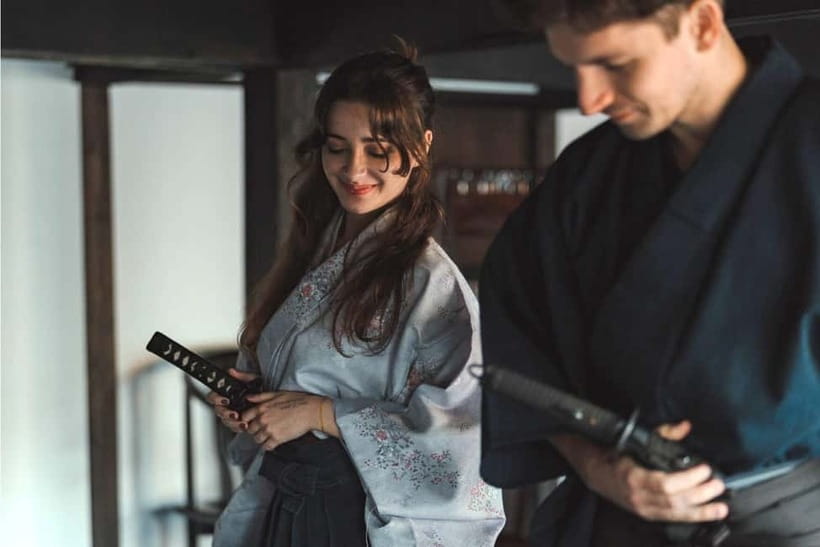
The day doesn’t end when you finish practicing. You watch a sword performance and a samurai art and sacred dance. One of the strongest descriptions of this portion is that it touches the soul—meaning you’ll feel emotion from the movement and sound, not just the mechanics of swordplay.
A key detail: improvised music can happen on the spot. That keeps the performance from feeling like a fixed script. It also means you’ll hear instruments reacting to the pacing of the dance, which makes the experience feel more alive.
You’ll also have a photo shoot opportunity. Since you’re already dressed in kimono and hakama, this is your chance to capture the full effect: the clothing, the posture, and the atmosphere. Bring your camera. If you care about photos, arrive mentally ready—kimono time can look effortless, but it’s usually guided, and the best shots come when you follow directions on stance and respect.
Tip: wear comfortable underlayers and avoid anything that bunches or slips. You want your clothing stable, so you can focus on posture during the photo moment.
Price and value: what $64 for 210 minutes really covers
At $64 per person for about 210 minutes, this isn’t a bargain in the “cheap activity” sense. It’s good value because you’re paying for multiple high-effort elements bundled into one package:
- Kimono and hakama rental, so you’re not responsible for sourcing or managing costume gear
- Sword coaching with an unsharpened blade, plus real cutting experience
- Standing Zen meditation in nature
- Sound meditation with traditional instruments (flute, drums, and additional sound tools depending on the session)
- Performance of samurai art and sacred dance
- A photo shoot opportunity
Also, the group size is capped at 10. That matters. When you pay for learning and a hands-on ritual, small group size turns the price into time with an instructor, not just time in a crowd.
Your biggest cost is the one not included: transportation to and from the activity location and meals. The route is doable by train—Uenohara Station is about an hour from Shinjuku and about 2.5 hours from Narita Airport—so you can plan your day without renting a car. But you will want to budget for the travel portion, since it can affect how you time your rest and meals.
From a value lens, this is best when you want a break from city-only Japan. The private river and sound-based meditation are the main reason it feels worth it.
Who should book this samurai sword and sound meditation experience
This experience fits best if you want a cultural day that’s active, quiet, and memorable in equal parts. You don’t need to be a martial-arts person. You do need comfort with standing and moving.
It’s especially good for you if:
- You want something different from standard sightseeing
- You like Japan that includes ritual and listening, not only photos
- You want both learning (sword basics) and emotion (dance performance)
- You enjoy sound meditation or are curious about how traditional instruments affect focus
It may not fit if:
- You have back problems or reduced physical mobility
- You’re traveling with children under 12 (not suitable)
- You’re pregnant (not suitable)
If you’re the kind of traveler who likes to escape the city and reset, the private nature setting does that job. And because the hosts are known for welcoming hospitality—tea, comfort, and a calm pace—you’ll likely feel looked after, not processed.
Should you book it?
Yes, if you want a day that blends samurai swordsmanship, river purification, and traditional sound meditation into one guided flow. The small group format, the mix of practice plus real cutting, and the inclusion of a sacred dance make it more than a short workshop.
Book it if you can handle standing and basic physical movement. Skip it if you’re managing a back condition or you need a fully low-mobility experience.
If you’re aiming for a trip memory that feels more like a personal ritual than a ticketed show, this is the kind of experience that earns that reputation.
FAQ
Where is the meeting point?
Meet at the rotary on the first floor of the south exit of Uenohara Station. The hosts will be waiting for you in a white car.
How long is the experience?
The duration is 210 minutes, which is about 4 hours including pick-up and drop-off.
What’s included in the price?
Included are kimono and hakama rental, swordsmanship practice with an unsharpened sword, a real sword cutting experience, standing Zen meditation in nature, sound meditation, a samurai art and sacred dance performance, and a photo shoot opportunity.
What do I need to bring?
Bring a camera, water, and comfortable clothes. You’ll also wear comfortable clothing under the kimono and hakama for easier movement.
What languages are available?
The instructor speaks English and Japanese.
Is transportation included?
No. Transportation to and from the activity location is not included.
Are there any restrictions on what I can bring or do?
Smoking, alcohol, and drugs are not allowed.
What if the weather is bad?
Depending on the weather, the event may be held indoors.
Is it suitable for everyone?
It’s not suitable for children under 12, pregnant women, or people with back problems. Physical fitness is required for the swordsmanship practice.
Can I get a refund if I need to cancel?
Free cancellation is available up to 24 hours in advance for a full refund.