REVIEW · HANOI
Full-day Guided Meditation Experience in Ha Noi
Book on Viator →Operated by The Bodhi Journey · Bookable on Viator
A quiet day in Hanoi, away from the noise.
This full-day meditation experience pairs a guided walk around the pagoda with instruction on Buddhist teachings you can actually bring into your day-to-day life. I like the way the morning starts with context—history and architecture—then shifts into the heart of the practice: meditation guided step-by-step under the Buddha’s teachings at the main hall.
What I also really like is the mix of stillness and movement. You’ll practice loving-kindness and compassion through rituals, plus qigong-style movements that are meant to support both mind and body. One consideration: lunch and dinner aren’t listed as included, and at $85 the day can feel pricey if you’re only in Hanoi for quick sightseeing rather than a true mental reset.
In This Review
- Key highlights worth your time
- What this 8-hour Hanoi pagoda day feels like
- Starting at Ngõ 68 Quan Nhân: timing and logistics
- Pagoda walk-through: history and architecture first
- Main hall teachings: Buddha’s life and the doctrines
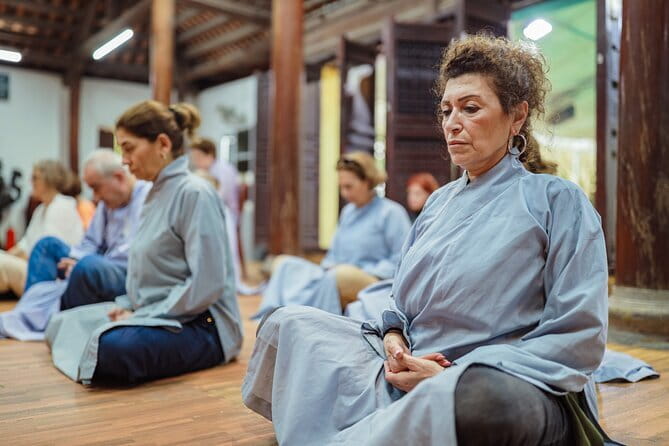
- Guided meditation sessions: learning the method
- Rituals, loving-kindness, and compassion in action
- Qigong movements: calming mind, supporting body
- Food, breaks, and keeping your energy steady
- Price and value: is $85 a fair deal?
- Who this meditation experience suits best
- Should you book this full-day guided meditation in Hanoi?
- FAQ
- Where does the experience start in Hanoi?
- What time does it begin?
- How long is the guided meditation experience?
- How much does it cost?
- Is lunch or dinner included?
- What is included in the price?
- Do I need a paper ticket?
- How many people are in the group?
- What is the cancellation policy?
Key highlights worth your time
- A full 8-hour rhythm that moves from pagoda tour to main-hall teachings to hands-on meditation practice
- Buddhist doctrine explained in plain language, so the ideas connect to how you live
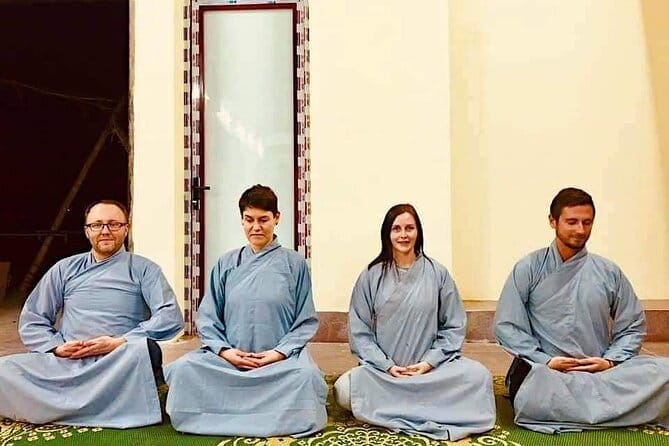
- Meditation method + quiet practice time, not just watching someone else do it
- Loving-kindness and compassion rituals, plus gratitude-focused guidance
- Qigong movements for health support, paired with the meditation work
- English instruction from licensed guides including teachers like Hung, Hieu, and Naya
What this 8-hour Hanoi pagoda day feels like
Think of this as a slow, guided off-ramp from Hanoi’s speed. The day is structured to help you settle your mind, then use that steadiness to learn practices rooted in Buddhist teaching. You’re not just learning concepts—you’re doing the work during the session.
The tone tends to be calm and respectful. You move through the pagoda with a guide, sit for instruction in the main hall, then return to practice time. It’s a full day, so you’ll feel it more like a retreat than a quick tour.
And yes, it’s spiritual. But it’s also practical. The goal is to show you methods for handling anxiety, grief, and confusion—the stuff life throws at you—without needing special equipment or years of training.
You can also read our reviews of more tours and experiences in Hanoi.

Starting at Ngõ 68 Quan Nhân: timing and logistics
The experience starts at 8:00 am at Ngõ 68 Phố Quan Nhân, Ng. 68 P. Quan Nhân, Trung Hoà, Cầu Giấy, Hà Nội. It ends back at the same meeting point, so you’re not left figuring out late-day transport on your own.
A couple things matter for your planning. First, it’s listed as near public transportation, which is helpful if you’re staying somewhere central and want easy access. Second, the day is about 8 hours (approx.), so you’ll want to keep your afternoon free for real rest afterward.
Also note the group size limit: there’s a maximum of 100 travelers. In practice, it can still feel quieter if the group is small, but you should expect a guided day that works even with larger numbers.
Pagoda walk-through: history and architecture first
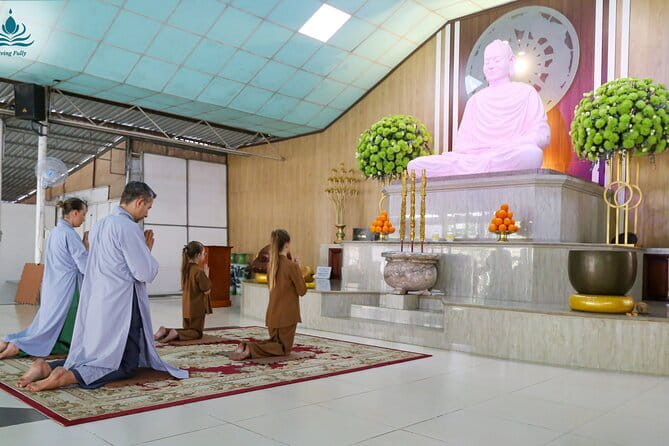
Before you sit down, you’ll get oriented. Your guide meets you at the pagoda and gives a quick intro to the itinerary, then takes you around the grounds to explain history and architecture. That early context matters because it makes the later teachings feel less abstract.
Instead of “here’s a building,” you get “here’s why it’s built this way” and “here’s how the place supports the practice.” It’s the kind of tour where the details help you understand what you’re seeing and why it’s meaningful.
A small drawback: if you’re hoping for a casual, flexible temple stroll, the day follows a plan. You’ll be guided, and you’ll likely move through the space with purpose rather than wandering at your own pace.
Main hall teachings: Buddha’s life and the doctrines

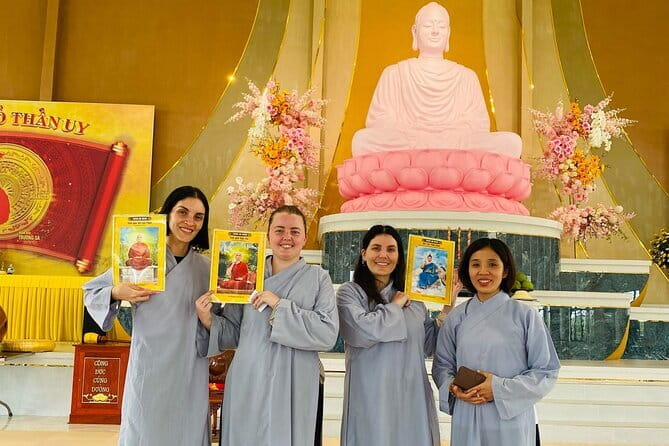
The centerpiece is the main hall. Here you’ll learn about the life of Buddha and the “profound Buddhist doctrines” you can apply to your own life. The way this is described is important: it’s not presented as trivia. It’s framed as a set of teachings with daily relevance.
You’ll also have a chance to ask questions during the day. Past groups have highlighted guides who were patient and willing to answer lots of questions without rushing you. Names you might hear include Hung and Hieu, and another instructor sometimes associated with this experience is Naya.
If you’re new, that helps. You don’t need a religious background to participate. The day is built for learning foundational ideas and turning them into simple practice steps you can try right away.
Guided meditation sessions: learning the method

This experience really earns its place in your schedule because it teaches a meditation method based on Buddhist teachings—then gives you time to practice it with focus.
Here’s the key difference: you’re not only listening. You’ll get instruction, then you’ll sit and try it during the day. That makes the experience more than a lecture, and it gives you a chance to notice what feels clear and what feels confusing.
Your guide will aim to help you slow down mentally and settle your attention. The goal is peace of mind—described as something greater than worldly treasures—and that goal shows up as you move from instruction into actual quiet practice.
If you’re someone who finds meditation intimidating, treat it like training your attention, not “becoming perfect at being calm.” The structure is there to support you.
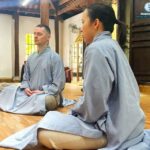

Rituals, loving-kindness, and compassion in action

After the core meditation, you shift into practices designed to cultivate emotional qualities. The day includes rituals connected to loving-kindness and compassion, along with guidance around gratitude.
This is where the experience moves from “inner work” to something you can feel more fully in your body and behavior. The rituals are meant to train how you relate to yourself and others. That’s the part that can stick with you after the day ends.
Some groups have also included additional activities such as fish releasing and other short components alongside meditation and exercise-style practice. If you’re sensitive to emotionally intense rituals, you’ll want to think about how you personally feel about symbolic actions—but the day is paced and guided.
Qigong movements: calming mind, supporting body
One of the most practical surprises is the inclusion of qigong movements. These aren’t presented as fitness class. They’re framed as supportive health practice that pairs with meditation.
If you’ve ever tried to meditate while your body feels tense, you’ll understand why this helps. Even a small sequence of gentle movement can make it easier to sit with a steadier mind.
The day also includes something described as exercise meditation. So you may do short movement or breath-and-focus style practice as part of the overall method. For many people, that blend reduces the frustration of trying to do everything sitting still.
Food, breaks, and keeping your energy steady
The basic tour description says lunch and dinner aren’t included, so you should plan meals unless the day’s schedule provides food coverage at the time you book.
At the same time, several participants have praised the quality of the meal during the experience, describing it as delicious or amazing. That’s a useful clue that there may be some eating time built into the day.
So here’s what I’d do: when you confirm your booking, check exactly what meals are provided during the schedule. Then bring a simple backup plan for the gap, especially if the day runs long.
Also remember: it’s an 8-hour mindfulness day. You’ll feel better if you keep blood sugar stable and avoid arriving hungry enough to turn every quiet moment into a negotiation with yourself.
Price and value: is $85 a fair deal?
At $85 per person for a roughly 8-hour guided experience, you’re paying for more than entry to a pagoda. You’re paying for a licensed guide, organized instruction, and guided practice time.
The included items listed are parking fees and the licensed guide. That means your money goes into staffing and guiding, not just access. If you show up wanting a structured day that teaches meditation steps tied to Buddhist teaching, the price starts to make sense.
If you mainly want a temple photos-and-stroll day, it may feel overpriced. One participant used that exact word—overpriced—so you’re not imagining the concern. This is best viewed as a learning experience, not a budget sightseeing stop.
Best value tip: treat the $85 as a “pay for time and guidance” fee. If you’ll use the meditation tools and ask questions, you’ll likely feel the day was worth it.
Who this meditation experience suits best
This is ideal if you want a calm, meaningful day in Hanoi with structure and real guidance.
It’s a strong fit for:
- People looking for Buddhist teachings explained in a way you can apply right away
- Anyone feeling stressed, stuck, or in need of a mental reset
- Parents or educators who want moral and compassion-based values in a grounded format
- Travelers who prefer hands-on learning over wandering alone
It may be less satisfying if you mainly want high-energy city sights, shopping stops, or a totally flexible schedule. This day asks you to slow down and participate.
Should you book this full-day guided meditation in Hanoi?
If you’re craving a day that feels purposeful, I think it’s worth booking—especially because the session isn’t just talk. You get a guided pagoda introduction, main-hall teaching, meditation instruction, and time to practice, plus compassion rituals and qigong-style movement.
Book it if:
- You want a structured way to learn meditation
- You like calm spiritual settings without the pressure to perform
- You’ll ask questions and take the guidance seriously
Skip it if:
- You’re trying to fill your day with casual sightseeing only
- You’re worried about the spiritual focus
- You don’t want to manage meals since lunch and dinner aren’t listed as included
If you do decide to go, I’d suggest going in with one simple intention: learn the method well enough that you can carry one practice step home. The day is built for exactly that.
FAQ
Where does the experience start in Hanoi?
It starts at Ngõ 68 Phố Quan Nhân, Ng. 68 P. Quan Nhân, Trung Hoà, Cầu Giấy, Hà Nội, Vietnam.
What time does it begin?
The start time is 8:00 am.
How long is the guided meditation experience?
It lasts about 8 hours.
How much does it cost?
The price is $85.00 per person.
Is lunch or dinner included?
No. Lunch and dinner are listed as not included.
What is included in the price?
Parking fees and a licensed guide are included.
Do I need a paper ticket?
You receive a mobile ticket.
How many people are in the group?
The tour/activity has a maximum of 100 travelers.
What is the cancellation policy?
Free cancellation is available up to 24 hours in advance for a full refund. If you cancel less than 24 hours before the start time, the amount paid is not refunded.